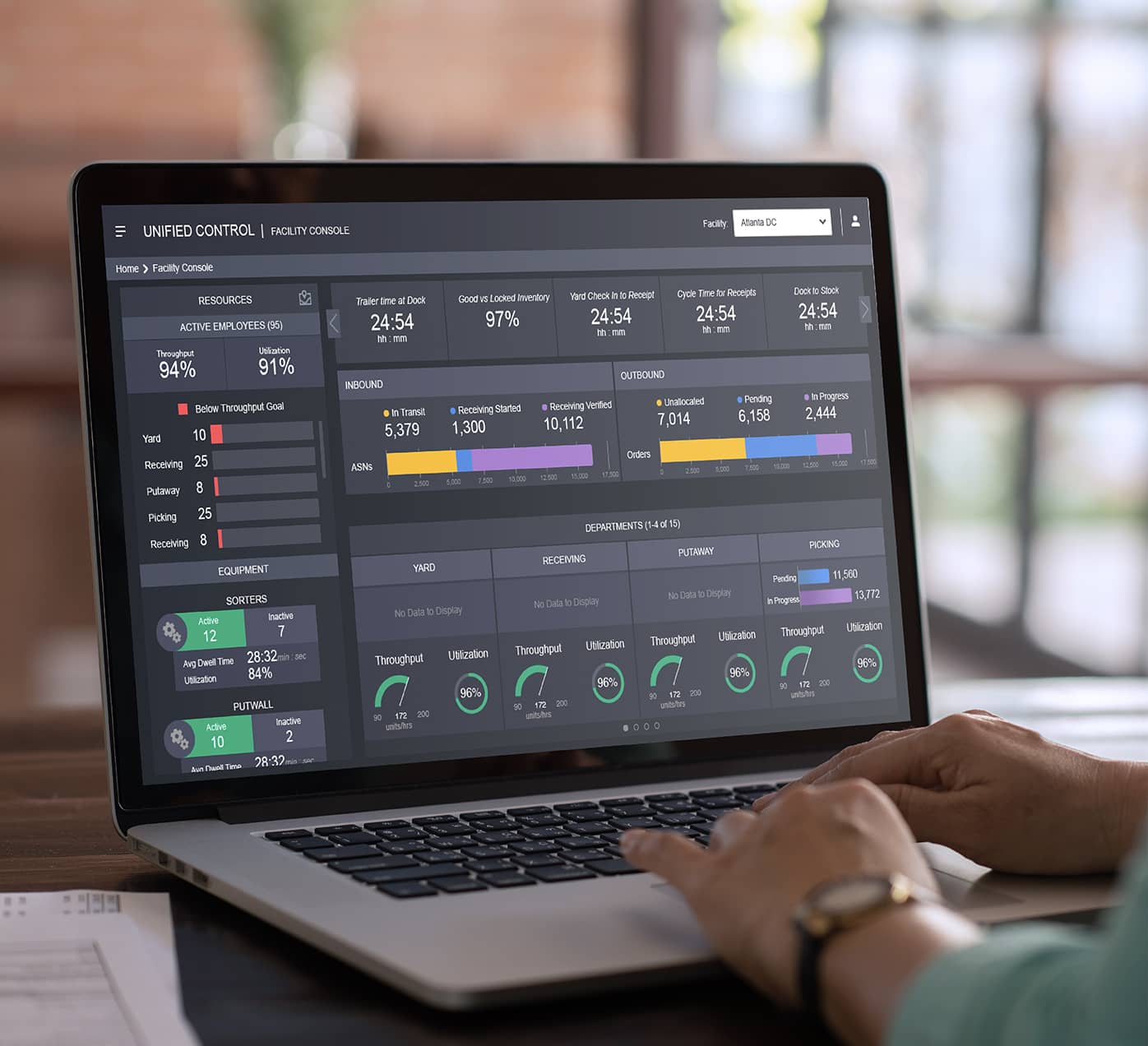
Unified Distribution Control
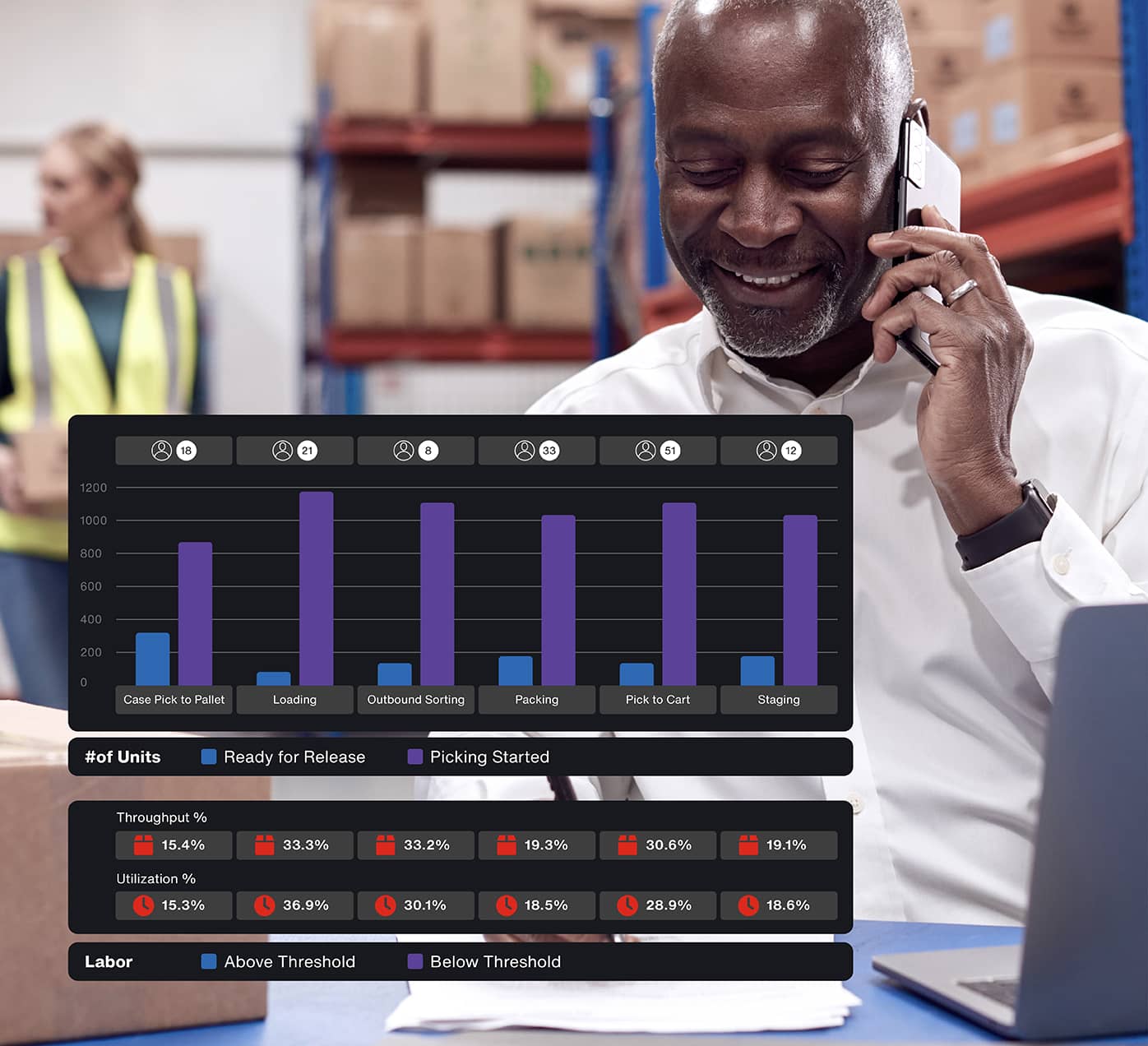
Unified Planning

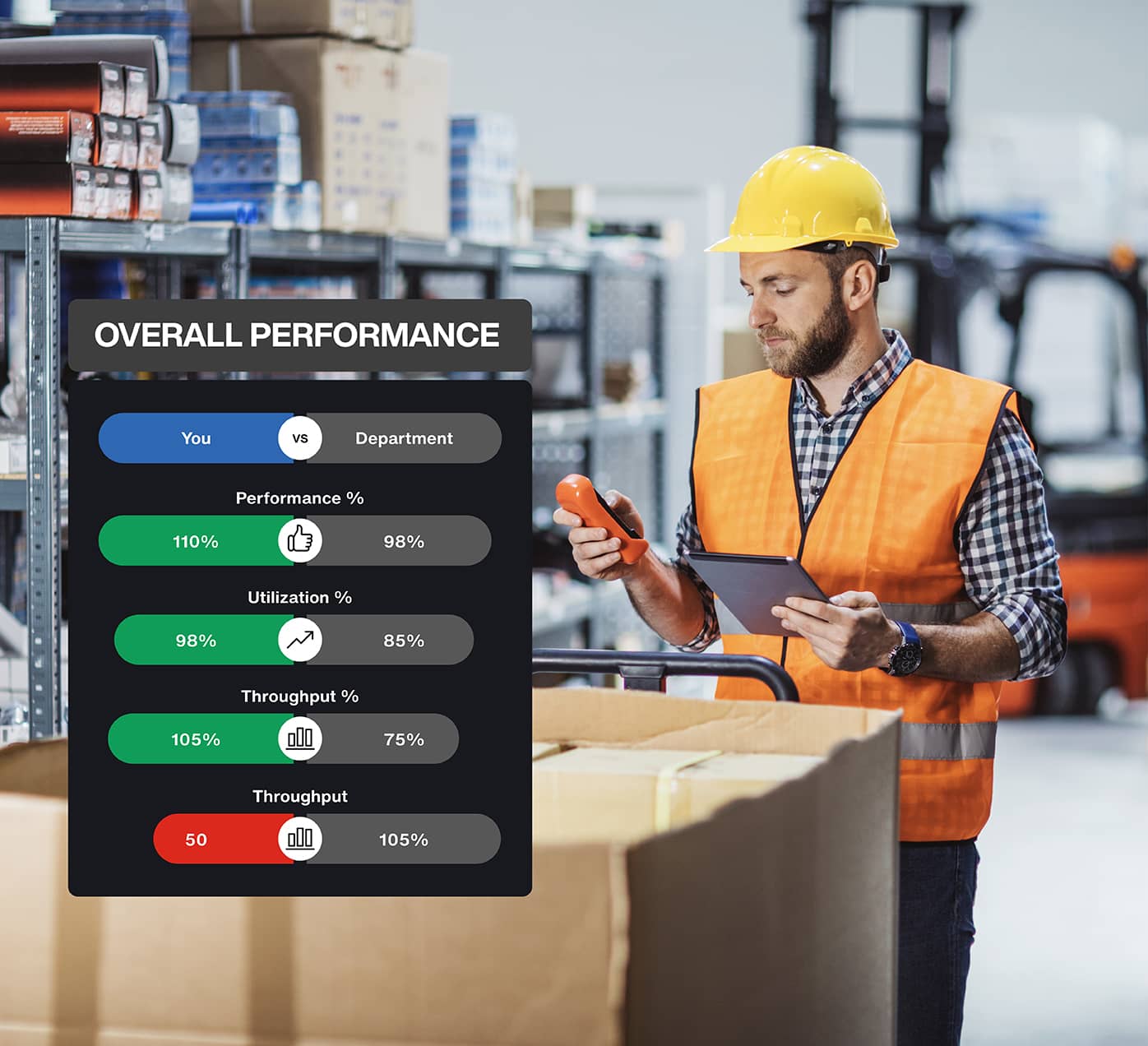
Unified Execution
ActiveWarehouse™
Unify inventory, labor, automation, and yard, in an AI-driven warehouse management system (WMS) that boosts throughput and keeps operations ready before the need arrives.


Manhattan WMS customer BESTSELLER rolls out Europe’s largest shuttle system, designed to house 1.4 million bins and 1,400 robots.
With the agility of Manhattan's WMS, Staples deployed 10 sites in just five-week intervals; all without disrupting a single customer order.
DHL selected Manhattan's WMS to break the upgrade cycle and leverage its cloud-based technology for over 14 M sqm of warehouse operations.
Operational Impact: Foot Locker's facility delivers a 40% increase in storage capacity, advanced automation, and improved productivity.
Choose from Essentials, Enterprise, or Enterprise Premier edition, each built for where you are today, with room to run ahead when you're ready.

Manhattan ActiveWarehouse is a cloud-native, continuously updated WMS that orchestrates workflows across labor, robotics, and transportation to maximize efficiency and reduce risk. Built on microservices and a unified operational data model, it delivers real-time visibility, intelligent execution, and native AI agents that read the same live operational state your operators use and act through the same APIs that run the warehouse. Quarterly updates and a versionless design eliminate costly upgrades and deliver new capabilities, including new agents, with zero downtime.
Many WMS vendors claim their agents are embedded in the system, when in reality those agents reason over data exported from the WMS rather than the live operation itself. The impact on your business is real: slower operational response as agents act on stale data, weaker audit and compliance defensibility as governance layers across two systems, and lower adoption as teams on the floor lose trust in recommendations they can't trace.
ActiveWarehouse agents actually share the WMS's data model and execution layer, so they act on the operation as it is, remain traceable in the same audit logs your teams already use, and get better at your warehouse the longer they run.

Hundreds of brands trust Manhattan, one of the leading warehouse management software companies, to power their global commerce. See their Customer Success Stories in the Insights section.







Disconnected systems force warehouse teams to juggle multiple platforms, creating data silos that slow decisions and drive up costs. IT leaders maintain legacy automation and robotics integrations rather than adopting cloud warehouse management software that simplifies their stack. Operations managers struggle to coordinate multi-channel fulfillment while keeping labor costs in check and retaining skilled workers. Supervisors lose the real-time inventory visibility they need to track performance and meet daily goals.
Manhattan's Warehouse Management solves these challenges by unifying distribution operations on a single platform. It integrates supply chain demand planning with inventory visibility, automation orchestration, multi-channel fulfillment, and labor management. Every role, from IT director to floor supervisor, works from one source of truth.
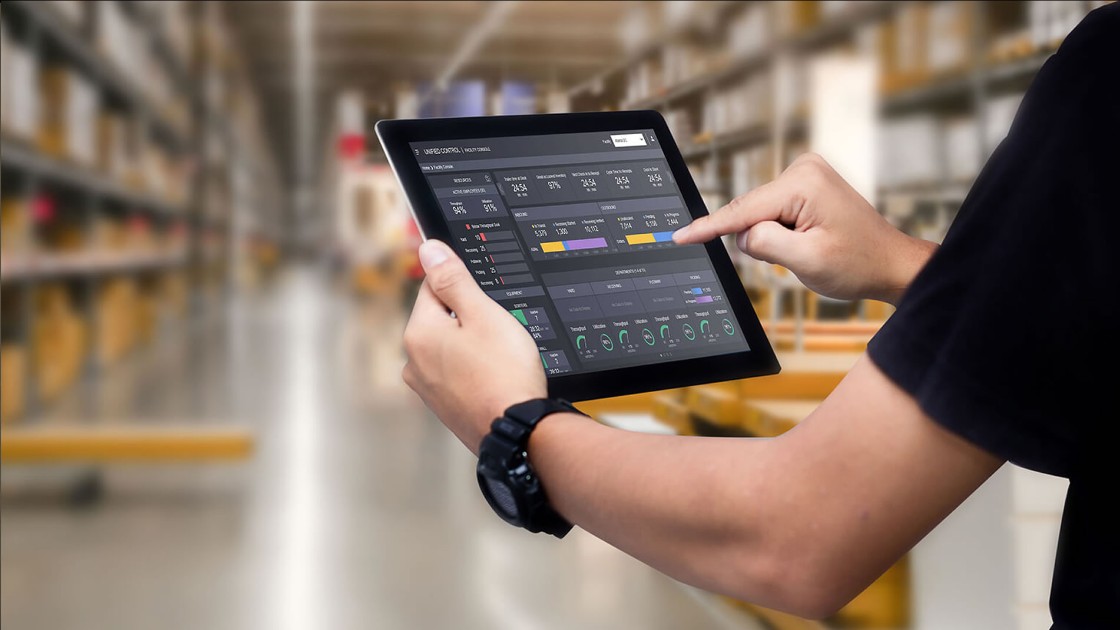
Warehouse Management offers real-time, end-to-end visibility across the supply chain, allowing managers to track inventory from inbound to outbound in a single interface. This visibility ensures accurate stock levels, reduces stockouts, and enables informed decision-making.
► Case Study: Increasing inventory accuracy 100%.
► Case Study: Enhanced visibility within distribution centers.
Warehouse Management’s built-in Warehouse Execution System (WES) unifies automation and robotics management within the WMS, enabling seamless orchestration of automated tasks. This vendor-agnostic system allows managers to easily onboard new technology, reducing the need for extensive IT resources.
► Video: New Distribution Center Capabilities With Manhattan
► Feature: Warehouse Execution System inside a Warehouse Management System
Warehouse Management’s unified Order Streaming capability enables simultaneous processing of wholesale, retail, and direct orders, enhancing flexibility and throughput across channels. This allows warehouse managers to meet complex omnichannel demands without manual reconfiguration.
► Feature: Order Streaming - Take a More Intelligent Approach to Orchestration Logic
With the Labor Management module, Warehouse Management applies gamification to motivate employees, provides real-time task prioritization, and helps improve labor productivity by up to 20%. This enhances workforce engagement and minimizes turnover by creating a rewarding work environment.
► Feature: Inspire and Motivate Your Workforce
► Case Study: Crocs and Manhattan Find The Perfect Fit
Recognized as a leader by Gartner Magic Quadrant
Recognized as a leader by Gartner Magic Quadrant
Recognized as a leader by Forrester Wave
Recognized as a leader by Forrester Wave
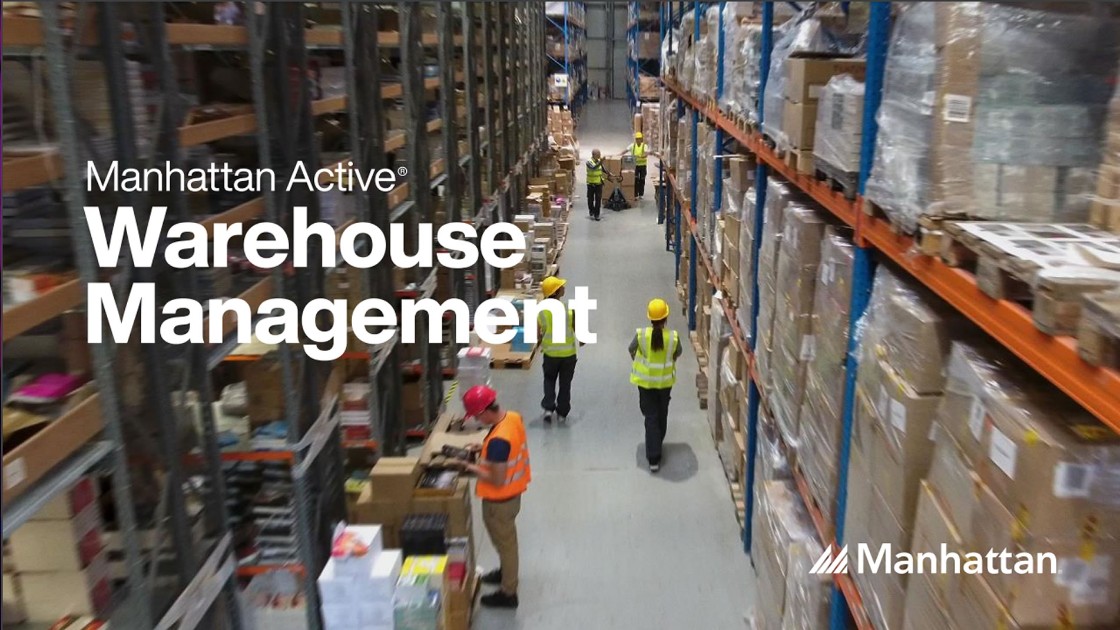
A Warehouse Management System (WMS) is essential supply chain software that optimizes the management, planning, and execution of warehouse operations.
Learn MoreAt Manhattan, we provide more than just supply chain solutions. We are a team of experienced industry experts dedicated to equipping our partners with the tools needed to navigate the supply chain commerce world effectively.
DownloadManhattan provides the expert support and services team transportation leaders and managers need to ensure success and optimize your solution investment at every touch point.
DownloadDirector of IT in the Retail Industry gives ActiveWarehouse 5/5 Rating in Gartner Peer Insights™ Warehouse Management Systems.

Discover how WSI leverages Manhattan's Warehouse Management to drive efficiency, support growth, and enhance customer fulfillment.
Key take-aways:

You are measured on throughput, service consistency, cost-to-serve, and peak-season recovery - and every minute of latency between operational reality and system action shows up in your numbers. ActiveWarehouse gives you native AI agents that act on live operational state, rebalancing waves and reallocating labor before disruption cascades into overtime and missed cut-offs. Because those agents share the same data model and execution layer as the WMS itself, they compound in value over time, learning your seasonal patterns, your exception archetypes, and the specific rhythms of your operation. The result is not just a system that runs the warehouse. It is a system that helps your warehouse get measurably better every quarter.

You are choosing an architecture your organization will live with for the next decade.
ActiveWarehouse is cloud-native, microservices-based, and continuously updated — with agentic AI built into the same platform and data model as the WMS itself, not layered on top through an integration. That means one governance model, one audit log, one execution path, and one architecture for your teams to secure and support. Agent Foundry extends the platform so your team or your partners can build custom agents on the same foundation as Manhattan's native agents, inheriting the same governance and audit properties. You govern one system, not a stack of AI tools that have to be reconciled every quarter.

AI investments are being defended against tighter scrutiny than a year ago, with harder questions about traceability, governance, and long-term value coming from your audit committee, your board, and your external auditors. ActiveWarehouse is built so every AI agent action is governed by the same execution model and traced through the same audit logs as the rest of the WMS - which means when your internal audit team, controllers, or SOX testers need to trace an action, they find it in one system, in one query, in plain language. Your audit cycle stays predictable. Your AI investment defends cleanly under review. And because the agents compound in value over time as they learn your operation, the platform's ROI curve slopes upward across your investment horizon rather than plateauing after year one.

Manhattan offers a complete breadth of solutions that when unified, provides total coverage for your supply chain commerce needs.

Manage every carrier, rate, route, and load with Transportation Management.

Empower employees to be more productive—and happier with their work—using Labor Management’s AI-enabled software.

Order Management provides stores with visibility into available inventory held anywhere, supporting endless aisle selling.
What you’ll need to know about Warehouse Management Systems.
Agentic AI in a WMS is software that observes operational state, reasons about what action is needed, and takes that action through the WMS itself — within bounds the platform enforces. A product that only surfaces recommendations for a human to enact is AI-assisted, not agentic. ActiveWarehouse is built so AI agents live inside the WMS itself rather than as an overlay platform sitting on top of it. The agents read the same real-time operational data your operators read, act through the same APIs that run the warehouse, and are governed by the same audit logging as the rest of the platform.
Several agents are already running in production in ActiveWarehouse™ customer environments. The Wave Coordinator Agent keeps outbound work moving by finding the root cause of wave shortages and deselections, then guiding the fastest corrective action so orders stay on track and cut-offs are protected. The Labor Agent keeps the workforce aligned to changing demand by spotting imbalances in real time and recommending or initiating the right labor moves before bottlenecks build. And the Warehouse Associate Agent supports frontline execution by giving associates step-by-step, in-workflow guidance and answers on their device, helping them work more accurately, ramp faster, and escalate less often.
What ties them together is the architecture. They live inside the WMS, governed by the same execution model as the rest of ActiveWarehouse, traceable through the same audit logs, acting on the same operational data the operator sees. And through Agent Foundry, customer teams and partners can build their own agents on the same foundation, extending the WMS itself with capabilities that handle the rules and exception types specific to their operation.
Manhattan’s agents operate within a deterministic action vocabulary and at an autonomy level your team configures — fully autonomous for routine, reversible decisions the platform is set up to handle, and human-reviewed for higher-stakes actions where your supervisors approve or modify the agent's recommendation before it executes. Every action, whether autonomous or supervised, is traced through the same logs as the rest of the WMS and is auditable in plain language from day one. Because the agents live inside ActiveWarehouse, governance is a property of the platform rather than a separate layer reconciled across two products. When your internal audit, controllers, or SOX testers need to trace what happened and why, they find it in one system, in one query.
A warehouse management system (WMS) is software to help organize warehouse operations.
A WMS is designed to control movement and storage of materials, track inventory, manage stock, and optimize picking and packing of orders. A WMS can also be integrated with other software—such as enterprise resource planning (ERP) and transportation management systems (TMS)—to offer an end-to-end view of the supply chain. Learn more in our article, What is a Warehouse Management System (WMS).
Because a cloud-native warehouse management system (WMS) is designed to run on cloud infrastructure—rather than on-premises servers—it offers:
Unlike most cloud solutions, Warehouse Management is engineered to be extensible—allowing users to add their own logic, integrations, and customizations without negatively affecting updates.
Both are software solutions to manage warehouse operations. Each has a different focus.
A WMS manages inventory by tracking inventory, stock locations, and stock movements, and can also be used to optimize picking and packing, while providing real-time visibility of warehouse operations.
A WES optimizes warehouse processes such as receiving, picking, packing, and shipping, often via advanced automation or robotics. It increases efficiency by automating repetitive tasks and reducing manual labor, while providing features such as real-time task tracking, work optimization, and automated replenishment.
WMS and WES can be used together to improve visibility and efficiency.
AI and machine learning are increasingly the difference between a WMS that records what happened and a WMS that helps the operation respond in real time. In ActiveWarehouse, AI takes the form of agentic capabilities — software that observes operational state, reasons about what action is needed, and takes that action through the WMS itself. The Wave Coordinator Agent rebalances waves as conditions change, the Labor Agent reallocates people before bottlenecks form, and the Warehouse Associate Agent works alongside operators at the floor edge. The result is a platform where AI is doing operational work today, governed by the same execution model and audit logging as the rest of the WMS, rather than producing recommendations that arrive after the moment has passed.
ActivePlatform technology makes it faster and easier than ever to connect to existing systems, valued partners, and new services. To make it even easier, we’ve already integrated Manhattan Active solutions with industry-leading solutions for everything from inventory visibility and autonomous mobile robots to payments, fraud, and search engine shopping, just to name a few. It’s your supply chain commerce ecosystem. Unified.
A cloud-native, evergreen, and extensible foundation engineered to handle the most complex supply chain networks in the world. Learn More.
API-first architecture with automated scalability, resiliency, and availability. Every component is part of a shared application platform.
Our low code, no code, your code development strategy means you pick what method of configuration and customization works best for you—with as much support as you want or need.
Every 90 days, solutions built on the ActivePlatform automatically receive new features and enhancements.