Agentic AI Has Arrived in WMS.
Here's What's Actually Different — And What Buyers Should Be Asking.
- June 25, 2026
- Manhattan Associates
- Read time: 5 minutes
The category is real. The vocabulary is still catching up.
Agentic AI in WMS has moved from a forward-looking conversation to an active capability conversation in roughly eighteen months. That is a healthy thing for the category. It is also a confusing one for buyers, because the vocabulary has not had time to settle. The word "agent" today is being applied to capabilities ranging from chat interfaces to recommendation engines to genuinely autonomous software acting inside the operation. All of those are useful. They are not the same product, and they are not interchangeable in production.
This is not unique to WMS. All fast-moving software categories eventually reach the point where every vendor sounds the same—even when their products are not. CRM turned every recommendation into “intelligence.” Finance branded every rules-based workflow as “automation.” Now WMS vendors are calling everything from a chatbot to autonomous execution an “agent.” The pattern resolves the same way every time: someone offers a working definition tight enough to separate the real thing from the adjacent thing, and the buyers who adopt that definition stop being misled by the slide.
For warehouse and supply chain leaders evaluating WMS investments right now, that working definition matters more than usual, because the cost of getting it wrong is operational, not analytical. A WMS purchase based on a fuzzy understanding of agentic AI does not just produce a tool that under-delivers in a quarterly review. It produces a platform commitment that compounds the wrong way for a decade.
Why agentic AI is a different conversation in WMS
Most software categories have been through some version of an AI hype cycle in the last two years. The version playing out in WMS is genuinely different from what is happening in CRM, in finance, or in HR for three reasons.
The work is different. AI in CRM helps a salesperson write a better email. AI in finance helps an analyst spot a variance. The human is still doing the work; the AI is making them faster. Agentic AI in WMS is supposed to take action, rebalancing a wave, reallocating labor, resolving an exception autonomously. That is a meaningfully different bar.
The cost of a wrong action is operational, not analytical. A bad recommendation in a sales tool costs a few minutes. A bad action in a warehouse, a wave released too early, a labor shift made on stale data, an exception left unresolved, costs cut-offs, overtime, customer credits, and audit findings. The downside is real, immediate, and visible to the people running the operation.
The system that runs the warehouse is also the system that has to govern the AI. The WMS is the system of record for inventory, labor, and execution. If the agent is acting on the warehouse, it is acting through the WMS. That makes the WMS-AI relationship structurally different from "an AI tool sitting next to the application." It is not optional in WMS. It is the architecture.
This is why "do you have AI?" is not a useful evaluation question, even though every vendor will answer yes. The right question is closer to: can your agents actually do work in our warehouse, and will we trust them when they do? 
What "agentic AI in WMS" actually means
A working definition matters here, because the term is being applied to a wide range of capabilities that do not behave the same way in production.
The most useful definition is this: agentic AI in a WMS is software that observes operational state, reasons about what action is needed, and takes that action through the WMS itself, within bounds the platform enforces.
- See. The agent has to see what is happening in the warehouse, in real time, with enough fidelity to act on it. Stale data or partial pictures break this immediately.
- Think. The agent has to evaluate options against the current state and pick one. This is where most of the marketing focus sits, but it is also the most replaceable component.
- Do. The agent has to do the thing, re-sequence the wave, change the labor allocation, hold the order, route the task, through the system that actually runs the warehouse. Without action, an agent is a recommendation engine in different packaging.
A vendor whose product can do all three is doing agentic AI. A vendor whose product surfaces a recommendation that a person then has to enact through the WMS is doing AI-assisted operations. Both are useful. They are not the same thing, and the difference is invisible in a demo if you are not looking for it. 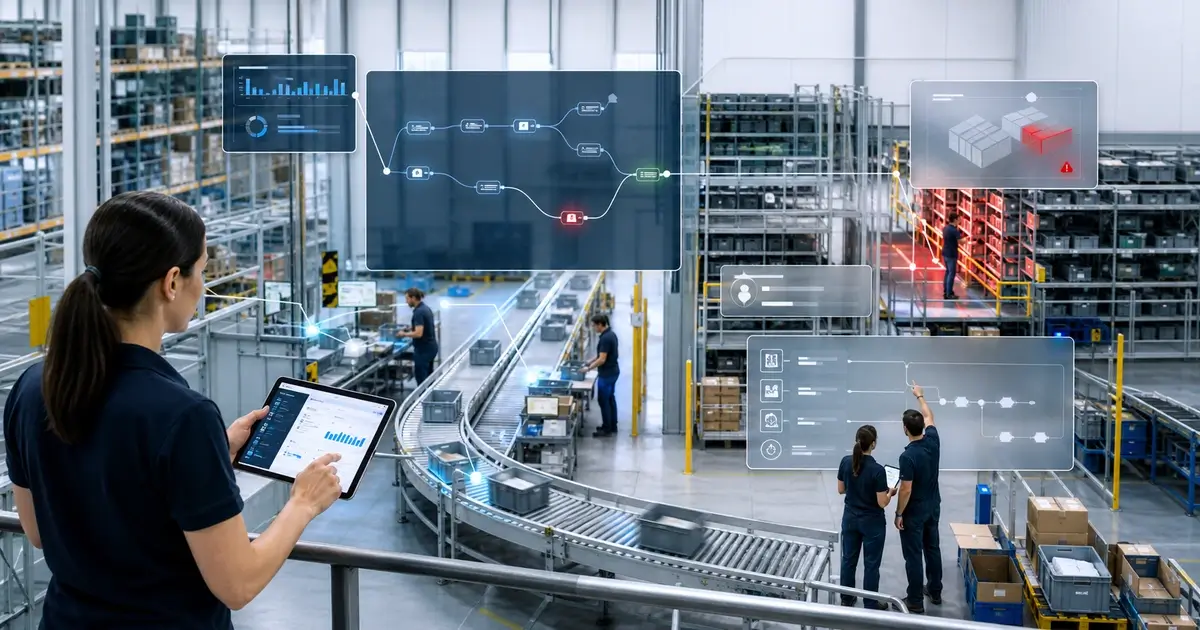
The question buyers should bring into every demo
The fastest way to tell which kind of AI a vendor is actually selling is to ask one question: where do the agents live?
There are two answers, and they imply very different products.
The first answer is that the agents live inside the WMS. They read the same operational data the operators read. They act through the same APIs the WMS uses to run the warehouse. The audit log of an agent action sits in the same place as the audit log of any other WMS action. Trust, governance, and execution all share one foundation.
The second answer is that the agents live in a separate platform that sits on top of the WMS. They ingest data from the WMS through an integration. They reason in their own environment. When they want to take action, they push a recommendation back through the integration to a person, or push a change request through to the WMS that the WMS then executes. Trust, governance, and execution are now layered across two products.
The first architecture is what makes "agents in production" technically achievable. The second architecture is what makes the demo look impressive but introduces the operational issues, latency, partial visibility, and layered audit that turn into deployment friction once the system is live.
This is not a value judgment. It is a description of how the products work. But the operational consequences are real, and they show up in the metrics buyers care about: same-day exception rate, labor variance, audit-cycle effort, peak-season recovery. Knowing which architecture you are buying changes how you should evaluate it.

What this looks like at Manhattan today
Several agents are already running in production in ActiveWarehouse™ customer environments. The Wave Coordinator Agent keeps outbound work moving by finding the root cause of wave shortages and deselections, then guiding the fastest corrective action so orders stay on track and cut-offs are protected. The Labor Agent keeps the workforce aligned to changing demand by spotting imbalances in real time and recommending or initiating the right labor moves before bottlenecks build. And the Warehouse Associate Agent supports frontline execution by giving associates step-by-step, in-workflow guidance and answers on their device, helping them work more accurately, ramp faster, and escalate less often.
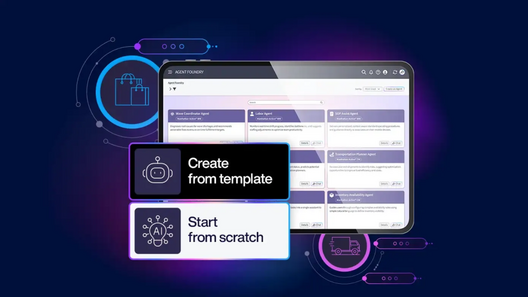
What ties them together is the architecture. They live inside the WMS, governed by the same execution model as the rest of ActiveWarehouse, traceable through the same audit logs, acting on the same operational data the operator sees. And through Agent Foundry, customer teams and partners can build their own agents on the same foundation, extending the WMS itself with capabilities that handle the rules and exception types specific to their operation.
That set of properties, available together, is not yet common in the WMS market. It is what makes the difference between vendor AI claims and AI doing meaningful work on a warehouse floor.
Where to go from here
The market has crossed the line into agentic AI. The products underneath the marketing have not all crossed it together. The buyers who do well in this category over the next few years will be the ones who understand the difference and ask for it specifically.