Beyond Channels: The Unified Commerce Advantage
- July 16, 2026
- Manhattan Associates
- Read time: 5 minutes
At Momentum 2026, one idea came through clearly: the store is no longer just another channel. It is becoming the connective tissue of the customer experience, bringing together fulfillment, service, brand experience, and human interaction in one place.
In a conversation moderated by Katie Foote of Manhattan Associates, featuring Erin Harrington of Vineyard Vines, Bryan Klein of Arc'teryx, and Chaitanya Tamhane of Belk, retail leaders shared how that shift is changing the way they think about customer journeys, store operations, AI, and organizational alignment.
The store is now where the brand comes to life
Bryan Klein described Arc'teryx stores as places where brand and community come to life, not just transaction hubs. He pointed to the brand's Soho flagship as an example: customers can step into the A-frame café, shop and try products, browse reconditioned resale gear, access same-day repairs, and even use wash-and-care services that help extend product life.
Erin Harrington described a similar philosophy at Vineyard Vines, even if the brand expression is very different. She said the store is the immersive expression of the brand, where customers can touch fabrics, understand product details, spend time with family, and build human connections with associates.
In this vision of retail, stores are not competing with ecommerce. They are where the brand promise becomes tangible.
Katie Foote underscored why this matters most now. Today good operations equals good customer experiences: As per the 2026 Unified Commerce Benchmark, conducted by Incisiv and sponsored by Manhattan, roughly 72% of buyers are beginning their journey with a brand on an LLM, and 66% engage across two or more channels before they ever interact directly with that brand. That makes the store even more important as a place where retailers can turn high expectations into real-world service, expertise, and connection.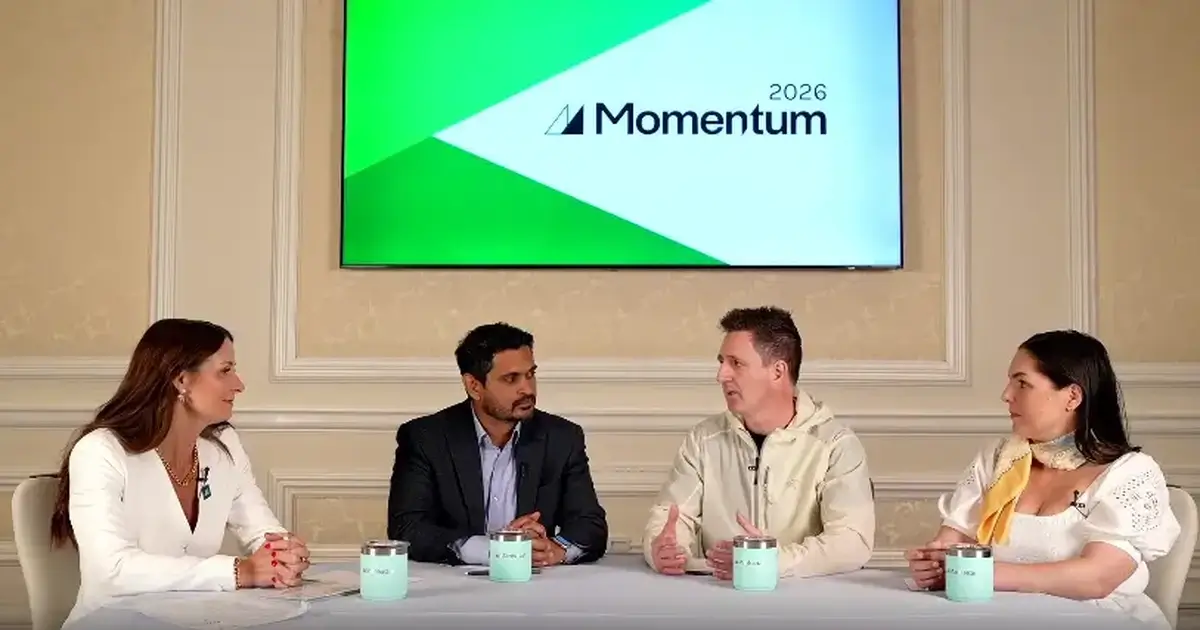
Unified commerce requires a shift in mindset, not just more acronyms
One of the strongest themes from the discussion was that retailers need to move beyond treating omnichannel as a checklist of isolated capabilities. Harrington said the old model of thinking in terms of ship-from-store (SFS), buy online, pick up in store (BOPIS), and buy online, return in store (BORIS) is too rigid for a customer environment that keeps changing.
Instead, she argued that retailers need nimble operating systems and tools that are ready for whatever comes next. Her point was simple: customers do not organize their expectations around internal retail acronyms. They judge experiences against the best brands they interact with.
That is a useful reframing for any retailer trying to modernize. Unified commerce is less about naming every journey and more about building the operational flexibility to support customer expectations as they evolve.
Belk's store-fulfillment move shows what operational transformation really takes
Chaitanya Tamhane shared one of the clearest examples of unified commerce in action: Belk moved fulfillment into its stores after assessing its network and unit economics, and had to redesign operations around that decision.
That meant reworking store layouts to create fulfillment space, adjusting labor plans to support higher volume, rolling out handheld devices and mobile printers, and introducing RFID to improve inventory accuracy and help associates find the last unit on the floor.
Just as importantly, Belk had to realign incentives, so stores received credit for online sales as well as walkout sales. Tamhane made it clear that without store buy-in, the transformation would not have worked.
The customer impact is broader than faster fulfillment. Foote noted that as per the Benchmark, when stores are used as fulfillment hubs, last-mile costs can go down by 31% and customer satisfaction can increase by 25%. Belk now supports ship-from-store, buy online pick up in store, curbside pickup, same-day delivery, and store-based returns that create another chance to engage customers, learn why an item did not work, and potentially convert that visit into another sale.
AI is raising the bar before the customer even enters the store
Another major theme was the growing impact of AI on customer expectations. Klein said consumers are increasingly using AI platforms to research brands and products before they begin their shopping journey. As a result, when they arrive in-store, they expect associates to be highly knowledgeable and inventory information to be accurate.
That pressure is changing how retailers think about AI internally as well. Foote quoted that according to the Retail CXO Outlook – Roadmap to 2030 report, while nearly 91% of retail C-suite leaders believe many of these capabilities will be table stakes by 2030, only 29% feel they have the right talent to orchestrate the operations and data required to make AI work. She also emphasized Manhattan’s pragmatic approach to AI, noting the company has already built about 20 base agents around real customer needs rather than abstract hype.
At Belk, AI already powers the website's recommendation engine and virtual shopping assistant. They are seeing immediate lift in conversion while also exploring labor scheduling and management use cases.
At Arc'teryx, Klein said AI is helping with labor and talent management through predictive analytics that forecast store traffic and improve team scheduling, supporting a broader goal of moving managers out of the back office and onto the sales floor with guests.
At Vineyard Vines, Harrington said AI has become a through line across the business rather than a separate initiative. She emphasized the importance of unlocking the creativity already inside the organization and giving teams room to experiment with technology in ways that improve daily work, generate insights, and solve operational problems.
Inventory accuracy continues to remain the biggest friction point
For all the progress these retailers have made, one challenge came up again and again: inventory accuracy.
Klein called it table stakes and a necessity if retailers want to respect the guest's time and fulfill the promise of what appears available online. Tamhane said inventory accuracy is the foundation that must be right before building anything else. Harrington added that promising something and then failing to deliver is the fastest way to lose a customer.
As Foote perfectly put it, good operations equal good customer experiences. Retailers cannot deliver seamless unified commerce if the underlying inventory, data, and execution are not dependable in real time.
Unified commerce is an organizational challenge
The panel made another point that deserves attention: unified commerce is not just a systems project. It is a change management project.
Klein said Arc'teryx's progress required moving away from siloed systems, selecting technology cross-functionally, realigning goals from channel-specific to market-specific, and developing insights that support decisions for the market rather than the channel.
Harrington described a similar transformation at Vineyard Vines, where the company went back to the enterprise data layer to redefine omnichannel demand around what the customer is experiencing, while separating customer-facing outcomes from backend operational optimization.
She also noted that empathy matters. Vineyard Vines asks corporate teams to work store shifts twice a year so they can better understand what customers and associates are dealing with on the ground.
Three practical lessons for retailers who are early in this journey
The panel closed with practical advice for retailers that are less mature in their unified commerce journey.
Erin Harrington's advice was to start with honest self-awareness about what is working, what is missing, and where the organization truly stands today. Bryan Klein emphasized executive sponsorship, a clear vision, a roadmap tied to KPIs, and a pragmatic project mindset.
Chaitanya Tamhane stressed the importance of a strong foundation built on accurate data and a single source of truth, then using AI to help associates do their jobs better rather than deploying it for its own sake.
Final thought
To conclude, it is clear that the future of commerce will not be won by brands that simply add more channels or more technology, but by retailers that make the store smarter, more connected, and more human, while aligning data, operations, incentives, and AI around the real needs of customers and associates.

Related Assets
Momentum 2026: Welcome to the Agentic Era. The Future Is Now.
Discover how AI agents, unified supply chain platforms, and real-time data are helping businesses accelerate operations at Momentum 2026 with Manhattan Associates.

Momentum 2026: Built for the Agentic and Unified Commerce Era
Explore Momentum 2026 highlights, where retailers and supply chain leaders showcased unified commerce, AI innovation, and real-world results in action.

The Ecosystem Isn't a Buzzword. It's Where the Next Wave of Value Lives.
Discover how Manhattan Marketplace enables AI-native supply chain innovation with integrated agents, faster deployment, and a scalable ecosystem.