From Hype to Workflow: What Agentic AI Means for Supply Chain Leaders
- August 10, 2026
- Manhattan Associates
- Read time: 5 minutes
The future of AI in supply chain will not be defined by generic chat experiences. It will be defined by whether AI can surface the right data, explain what is happening, recommend next steps, and help people make faster, better decisions inside the workflows where work actually happens.
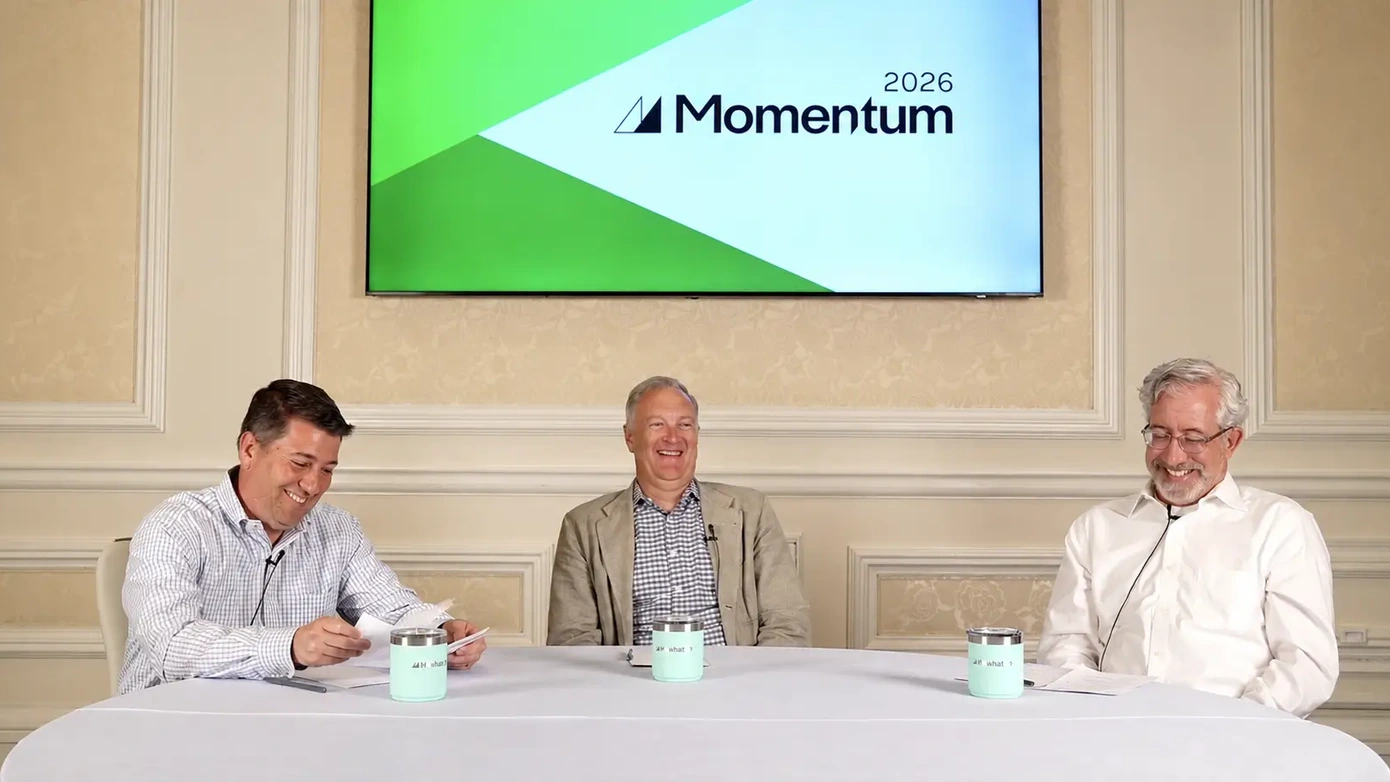
For supply chain leaders, the practical question is where agentic AI can create measurable value right now. In a LinkedIn Live discussion at Momentum 2026, Russell Kushner, VP, Professional Services at Manhattan Associates, Brian Kinsella, SVP & Chief Product Officer at Manhattan Associates, and Alan Erera, Manhattan Associates' Dabbiere Chair and Professor at Georgia Tech, explored that question from both operational and academic perspectives.
The problem is not lack of data. It is the lack of timely action.
Supply chain teams have never been short on data. What they have been short on is the ability to turn late signals, scattered information, operational constraints, and constant change into fast, confident action.
Kushner described the operational reality: warehouse supervisors are trying to keep fulfillment moving, transportation planners are responding to exceptions, and store associates are trying to meet sales goals with better context. Across those roles, the value of agentic AI is not in producing more answers. It is in helping people act faster and more effectively inside the flow of work.
What differentiates an agent from traditional automation?
As Erera explained, traditional automation works well when rules are known, workflows are defined, and the process can be tightly prescribed. Agents, by contrast, become useful when there is ambiguity and reasoning is required.
For supply chain leaders, that distinction matters because many core processes still depend on structured systems, deterministic logic, and hard constraints. As Erera explained, agentic AI does not replace those foundations. Instead, it adds a reasoning layer at the front end, helping users interpret situations, diagnose issues, and decide what to do next before the system executes through governed APIs and applications.
Kinsella emphasized that in enterprise settings, the most useful agents are not just Q&A bots. They are embedded directly into business workflows, helping users move forward without leaving the transaction or bouncing into a separate tool.
The future is not about layering a chatbot over operational complexity. It is about making the application itself smarter.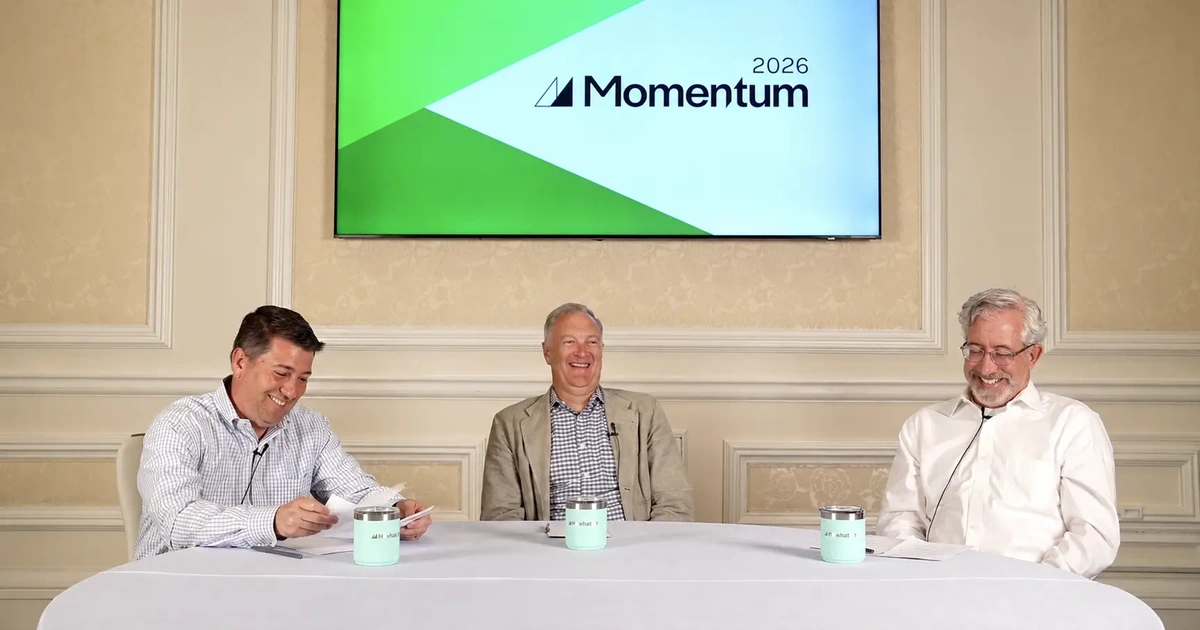
The highest-value use cases are practical, not theoretical.
Supply chain organizations should not start with broad visions of autonomy. They should start with high-friction workflows where better reasoning and better recommendations can create measurable improvement.
In warehouse operations, Kinsella pointed to the role of the wave supervisor or wave coordinator. On paper, outbound processes can look straightforward. In practice, they are filled with exceptions, dependencies, and operational nuance. Orders do not always convert into tasks as expected. Groupings break. Supervisors spend time diagnosing what went wrong and what to do next.
This is exactly where agentic AI can help. Instead of forcing users to manually investigate every exception, an agent can examine what failed, reason through likely causes, and recommend a next step. That is a meaningful shift because it shortens the distance between diagnosis and action.
On the transportation side, Erera highlighted reactive replanning as one of the most promising applications. Transportation plans are often built around hard constraints, but experienced planners know when those constraints can be flexed in the real world. A route might go a little farther. A trailer might hold a little more. A stop might be slightly late if the tradeoff creates a better overall outcome.
He also described agentic systems as especially powerful in reactive replanning: they can help planners re-evaluate routes, use planner feedback to adjust constraints, and explore alternative routing options more quickly than traditional, fixed optimization runs. Kinsella added that once plans change, a significant amount of effort goes into telling store managers and other stakeholders what was replanned and what shifted; agents can automate much of that communication, so the wider organization knows what changed and why without constant manual updates.
Focusing on commerce operations, Kinsella pointed out that store associates do not need another dashboard and do not need a fully open-ended chatbot. What they need is prescriptive, contextual guidance: what to focus on, how to improve performance during the day, and what signals from digital behavior may help them serve customers more effectively in person.
Across these examples, the pattern is consistent. The most valuable agentic use cases are the ones that help people interpret, prioritize, and act within an existing workflow.
Explainability and trust will drive adoption.
As both panelists emphasized, trust remains a central issue. Supply chain leaders are right to ask why a system produced a recommendation, what constraints shaped it, and how to prevent bad outcomes.
That is why explainability matters so much. Erera noted that one of the most useful roles for agents may be helping users interpret the outputs of complex logistics and optimization models. Kinsella pointed out that this is especially relevant in areas like transportation optimization, demand forecasting, and other systems where users often know something happened, but cannot easily see why.
This is not a secondary issue. In many organizations, adoption stalls when users cannot explain a recommendation to a boss, a finance leader, or a broader operating team. Agents that improve interpretability do more than save time. They strengthen confidence.
Governance still matters in the agentic era.
Kushner brought up an important point - a common fear of what happens if AI makes the wrong call at scale.
The panelists’ answer was pragmatic. Businesses have always needed controls, review cycles, roles, permissions, and human judgment. Agentic AI does not remove that responsibility. In fact, it makes sound governance even more important.
The right model is not uncontrolled autonomy. It is governed assistance. In many cases, that means a human remains in the loop. In others, it means the agent operates only through the same application roles, permissions, and API structures already in place. The point is not to let intelligence run wild. The point is to make decision-making faster without weakening control.
The real takeaway: start with value.
When asked what would be the experts’ most practical advice for listeners, the answer was simple and straightforward: start with the workflow. Find the pain point. Make sure the data is actionable. Involve the people who actually do the work. Then experiment.
That approach is especially important now, when so many organizations are under pressure to “do something with AI.” The companies most likely to create real momentum will be the ones that resist random experimentation and instead focus on specific, high-friction decisions where reasoning, context, and action can come together.
Agentic AI is not valuable because it sounds futuristic. It is valuable when it helps an operation move faster, explain decisions more clearly, adapt more intelligently, and deliver measurable outcomes.
The opportunity is real, but the winners will be the organizations that embed AI into operational workflows, keep humans and governance in the loop, and stay relentlessly focused on value.
Watch the complete discussion here