Practical AI Driving The Future of Warehouse Productivity
- June 30, 2026
- Manhattan Associates
- Read time: 3 minutes
At Momentum 2026, one of the most useful conversations about AI in the warehouse was also one of the most grounded. Instead of treating autonomy as something that will suddenly transform operations overnight, the panel focused on a more practical question: where is AI creating value on the warehouse floor right now, and what still has to happen before truly autonomous operations become real?
This Linkedin Live discussion brought together Jason Shefrin, President and COO at Ubique Group; Ashish Kumar Nandy, Vice President of Technology and Digital Transformation at Radial; and Adam Kline, Senior Director of Product Management at Manhattan. Their message was clear. The future of warehouse productivity is not about replacing people with AI. It is about combining people, automation, data, and intelligent decision-making in ways that improve service, throughput, and resilience.
The big takeaway from this discussion was that practical AI is already helping warehouses work smarter today, but the road to full autonomy will be built step by step.
Productivity is now bigger than labor efficiency
One of the strongest themes in the discussion was that warehouse productivity can no longer be measured through labor efficiency alone. In a more complex fulfillment environment, productivity has to account for the total flow of the operation: people, machines, service levels, accuracy, and the ability to adapt.
Jason Shefrin described that shift well. In the past, labor productivity may have been the primary metric. Today, while efficiency still matters, customer expectations matter just as much. Warehouses are under pressure not only to move work faster, but to fulfill orders in the right way for the right customer at the right service level.
This view was echoed across the panel. Ashish Nandy pointed to the growing importance of KPIs, SLAs, and customer satisfaction metrics alongside labor performance. Adam Kline added that productivity and throughput now have to be viewed more holistically, especially as automation and orchestration become a bigger part of the operating model.
Simply put, the benchmark is changing. The most effective warehouses are not the ones that move the most units per hour. They are the ones that can balance speed, service, and control in a far more dynamic environment.
The most valuable AI use cases are practical, specific, and operational
The panel also offered an important reality check on where AI stands today.
As Jason put it, “true AI integrated in the warehouse floor” is still aspirational. What many operators are implementing now is closer to structured intelligence: rule sets, thresholds, prioritization logic, and heuristics that help teams make better decisions faster. That may not be the futuristic version of AI that gets the headlines, but it is delivering real value.
That distinction matters. Warehouses do not jump from manual work straight to autonomous decision-making. They build the operational rules, process discipline, and system logic that make more advanced AI possible later.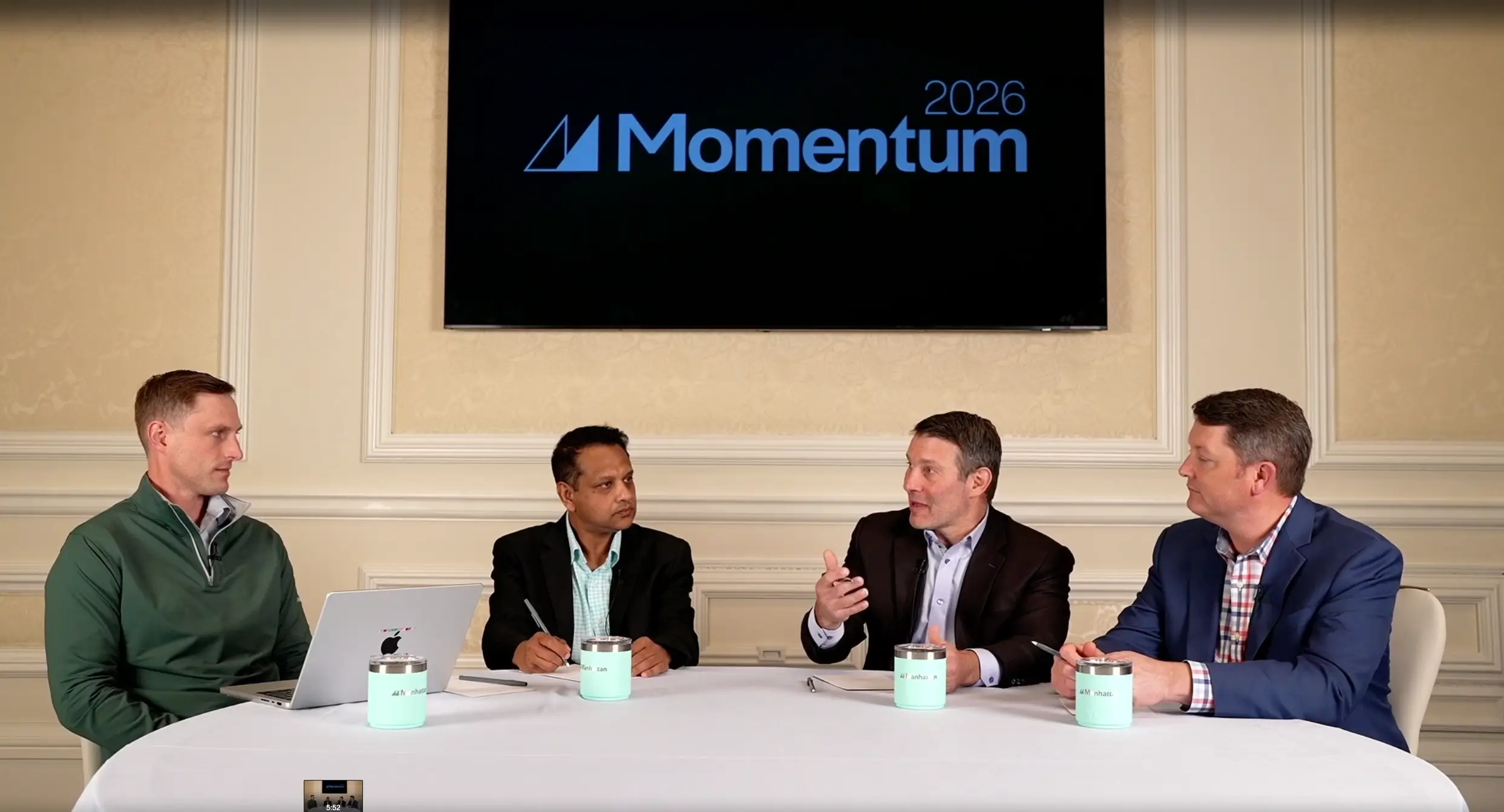
Panelists shared several examples of what this looks like in practice:
At Ubique Group, labor management capabilities helped the team move beyond treating every order the same. When volume spikes made it impossible to ship everything cleanly, the team could rerun queues and re-wave work based on customer priority and SLA requirements. That allowed labor to go where it mattered most instead of letting incoming work dictate the day.
At Radial, automation integration improved picking efficiency by guiding associates directly to locations, simplifying batch picking, and reducing wasted motion on the floor.
Radial has also been piloting AI agents for exception management and troubleshooting. Rather than waiting for issues to pile up in peak periods, the system can proactively flag problematic orders or packages, helping teams intervene sooner and reduce manual research time.
These examples all point to the same lesson: the best early AI wins are not abstract. They are tightly connected to operational bottlenecks such as prioritization, exception handling, labor balancing, and visibility.
Human plus automation is still the model that works
Jason argued that one of the biggest mistakes leaders can make is assuming the warehouse of the future will simply be run by robots and computers. In his view, resilient operations will still be defined by people who understand how orders need to be processed and who are supported by technology that helps them do that work better.
Ashish made a similar point, describing technology as an extension of the associate rather than a substitute for them. In the examples he shared, the gains came from human workers and automation working in tandem. Bots handled guidance and movement. Associates handled execution, judgment, and completion. The result was not less human involvement, but better-enabled human involvement.
That is an important distinction for the broader conversation around AI. The real opportunity is not to remove people from warehouse operations. It is to help them make faster decisions, focus on higher-value work, and perform more consistently under pressure.
Unified platforms will matter even more as AI matures
If practical AI is the present, the panel suggested that platform architecture will determine who is ready for what comes next.
Adam Kline emphasized that unified, cloud-native platforms are the backbone for more intelligent warehouse operations. When warehouse management, labor, transportation, and execution data work together on a common platform, organizations gain the visibility and operational context needed to do more than just surface insights. They can take action.
The distinction between seeing and doing is critical. AI may be able to identify a problem or recommend a next step, but lasting value comes when those insights are connected directly to operational workflows. A cloud-native, API-first foundation makes that possible by supporting faster change, more continuous innovation, and tighter coordination across systems.
The discussion made another point that is especially relevant right now: unification is not just a technology story. It is what allows warehouses to become more flexible, and flexibility may be the most important capability of all as customer expectations, labor conditions, and fulfillment complexity continue to evolve.
The real path to autonomy is incremental
The session focused on practical use cases and some of the most useful insights came from acknowledging what still is not ready. That honesty made the conversation even more valuable.
AI is not magic, it is a progression. First come better rules, better visibility, stronger process standardization, and more connected systems. Then come more intelligent recommendations, more proactive exception handling, and more embedded decision support. Only after that foundation is in place does more autonomous behavior become realistic at scale.
For warehouse leaders, that is probably the most actionable takeaway of all. The organizations that will benefit most from AI are not necessarily the ones chasing the boldest headlines. They are the ones building the operational discipline, unified architecture, and workforce enablement needed to turn intelligence into execution.
While that may be less dramatic than the usual AI narrative, it is far more likely to work.
Watch the complete conversation here.