The SaaSpocalypse Myth and the Rise of Native, Built-In AI
- June 17, 2026
- Manhattan Staff
- Read time: 4 minutes
If there is one message emerging from the enterprise AI conversation, it is this: the future will not be defined by whichever large language model is trending this quarter. It will be defined by which software platforms can turn intelligence into action inside real business workflows.
That was the central theme of “Busting the SaaSpocalypse Myth,” a LinkedIn Live conversation at Momentum 2026, Manhattan annual user conference in Las Vegas last month. Moderated by Manhattan’s VP of Product Marketing, Chris Shaw, featuring Chief Technology Officer Sanjeev Siotia and Chief Product Officer Brian Kinsella, the discussion cut through one of the biggest sources of confusion in the market today: too many people are still treating LLMs and agentic AI as if they are the same thing. They are not.
As Siotia explained, an LLM is an important component, but it is only one part of the equation. Real agentic AI requires orchestration. It follows a “think, see, do” model, where the model handles the thinking, but the application provides the visibility, context, and execution needed to produce a real business outcome.
That distinction matters because enterprise operations do not run on prompts alone. A language model can return an answer, but it cannot by itself execute a workflow, enforce business rules, or safely operate within the controls required by mission-critical systems. In supply chain commerce, that “do” layer is everything. Reassigning labor, surfacing the next best action, guiding an associate, or resolving an exception all depend on the application remaining in control.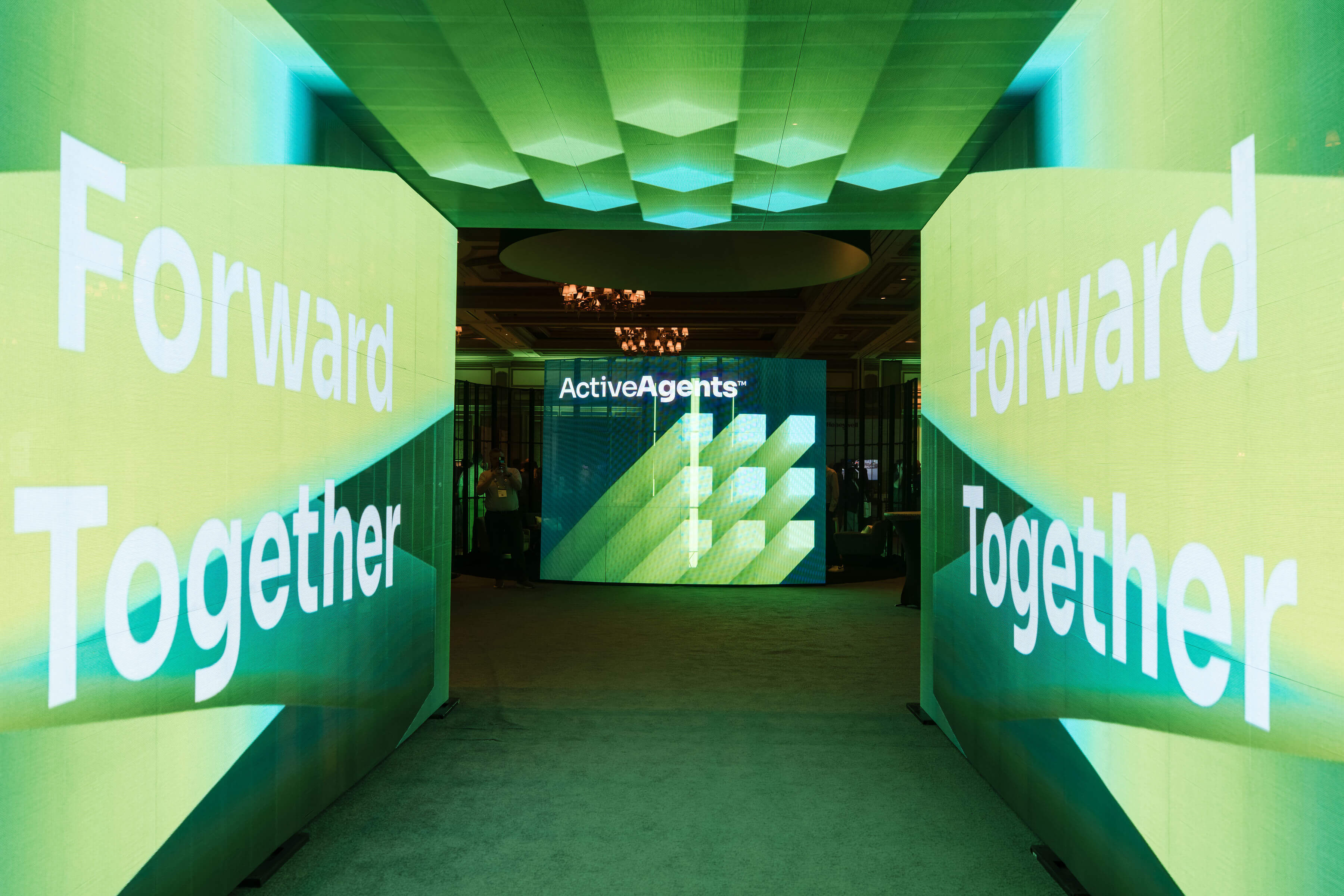
That is why built-in AI matters. If intelligence sits outside the operational system, it becomes harder to deliver both action and trust. Siotia described the need for a “deterministic spine,” meaning the core enterprise application must remain the system of control even as AI helps drive decisions. In Manhattan’s architecture, execution still happens through the same APIs, validations, permissions, and governance models that already protect the business. That is a crucial difference between enterprise AI that can be trusted and AI that simply sounds convincing.
Context was another major focus of the discussion. In consumer AI, users often supply their own context through prompts. In enterprise software, that context has to come from the live operational environment: the order, the store, the worker, the customer, the shipment, the inventory position, and the business rules surrounding them. As Siotia noted, “prompt engineering” is quickly giving way to “context engineering.” The challenge is no longer just asking a better question. It is supplying the right amount of operational context, at the right moment, so the system can generate a useful and actionable result.
That is also why bolting AI onto enterprise software has limits. If data has to be pulled out of the application and moved into a side layer for the AI to “see,” latency becomes a problem, especially in environments where conditions change constantly. And if the AI is disconnected from the application itself, the “do” part becomes far more difficult, if not impossible.
Kinsella brought the operator’s lens to the conversation. The average warehouse worker, store associate, or contact center agent is not bouncing among tools all day. They are spending hours inside a single application, doing work that depends on speed, clarity, and confidence. If AI lives outside that experience, it creates friction. And friction is the fastest path to underuse.
That insight may be the most important takeaway from the conversation. The best enterprise AI experiences will not feel like separate chatbots layered on top of work. They will feel like the application itself has become smarter, more contextual, and more capable. In fact, one of the most practical observations from the discussion was that frontline users often do not want an open-ended chatbot at all. What they want are highly prescriptive, relevant recommendations delivered directly in the flow of work.
Sometimes that means showing a consistent set of key metrics so experienced users can orient themselves immediately. Sometimes it means dynamically narrowing 50 possible actions down to the two or three that matter most in a given moment. Either way, the goal is the same: reduce noise, remove hesitation, and help people act with greater speed and confidence.
The conversation made this especially tangible in retail. Rather than expecting an associate to ask broad questions into a chatbot, the system should proactively surface the most relevant insight once the transaction context is known, such as what a customer has liked before, what did not fit, or what recommendation makes sense in that exact interaction. That is a much more practical model for enterprise AI than simply adding another conversational layer on top.
The discussion also addressed a growing question in the market: if AI can generate code, why buy enterprise software at all? The answer is that code is only a fraction of the value. The harder work is building, operating, scaling, securing, governing, and continuously improving systems that run in production. As Siotia put it, code writing represents only a small slice of what it takes to deliver a real product. Durable value in the agentic era will come from architecture, data, workflow, orchestration, governance, and accountability, not from generated code alone.
There was also a useful message for business leaders deciding where to begin. Kinsella pointed out that AI should not be treated as a centralized overlay or innovation lab disconnected from the business. Real innovation happens inside domains, teams, and applications where people understand the work deeply. Siotia reinforced the point from a different angle: start with value. Identify the right use case, solve a real problem, and avoid turning AI into a science project.
If “SaaSpocalypse” was meant to provoke, it ultimately clarified something more important. The future is not about replacing enterprise applications with general-purpose AI. It is about infusing AI into the operational core, where context is richest, controls are strongest, and value is measurable. The winners in this next era will be the platforms that combine AI’s flexibility with enterprise software’s discipline.
In other words, the future does not belong to AI that merely talks. It belongs to AI that understands, orchestrates, and executes where the work actually happens.
To hear the full discussion from Momentum, watch the video below.