Best Order Management Software (OMS) Compared
Which of These 7 Platforms Is Right for Your Retail Strategy?
Key Takeaways
- Enterprise Retailers Need Order Management Software Built for Unified Commerce. Modern retailers require more than basic order processing. The best order management software enables real-time inventory visibility, intelligent order routing, omnichannel fulfillment, and seamless customer service. Enterprise-grade OMS platforms help retailers support BOPIS, ship-from-store, and post-purchase order modifications while improving fulfillment speed and customer satisfaction.
- OMS Architecture Determines Long-Term Scalability and Performance. Not all order management systems are designed for complex retail operations. As fulfillment networks expand, retailers need cloud-native OMS solutions that unify inventory, fulfillment, and customer engagement on a single platform. Choosing an order management system with scalable architecture reduces technical debt, improves agility, and supports future growth without costly replatforming efforts.
- Advanced Order Orchestration Drives Higher Margins and Better Customer Experiences. Leading OMS platforms leverage real-time inventory data, machine learning-based order promising, and automated fulfillment optimization to reduce shipping costs and increase delivery accuracy. Retailers that invest in advanced order orchestration can improve conversion rates, maximize inventory utilization, and deliver the fast, reliable omnichannel experiences today's customers expect.
Selecting an order management system (OMS) for 2026 shapes how a retailer promises delivery dates, routes inventory, and recovers margin from every fulfillment decision for years to come. Shoppers now expect accurate real-time delivery windows, buy-online-pickup-in-store (BOPIS) without friction, ship-from-store at full network scale, and self-service order modifications after purchase. Few platforms deliver all of those outcomes together, and even fewer do it on architecture that scales without a re-platform.
Seven vendors dominate enterprise order management software shortlists this year: Manhattan, Blue Yonder, Aptos, Kibo Commerce, Fluent Commerce, IBM, and Salesforce. Not all of them compete in the same league. The right pick depends on your omnichannel ambition, the complexity of your fulfillment network, and how tightly your order management connects to inventory, stores, and customer service.
For unified commerce at enterprise scale, the Manhattan ActiveOrder™ solution for order management, fulfillment orchestration, and customer engagement sets the standard.
This article explains what separates the top seven order management systems in 2026, how their promising engines and fulfillment architectures enable profitable order execution through unified inventory and real-time order data. You'll learn how Manhattan's Order Management turns global inventory visibility and machine-learning promising into faster delivery decisions, higher digital conversions, and lower fulfillment costs.
How the 2026 OMS Landscape Splits Into Two Tiers
The seven platforms group into two distinct tiers. Each tier serves a different kind of buyer. Confusing the two leads to wasted investment or capability gaps that surface when demand peaks or operations expand to new geographies.
The first tier covers enterprise-grade unified commerce platforms built for multi-banner, multi-country operations with complex inventory and fulfillment networks. Manhattan Order Management, Blue Yonder Order Management, IBM Sterling Order Management, and Fluent Commerce sit in this group. These platforms handle deep inventory segmentation, complex fulfillment orchestration across hundreds of nodes, multi-currency and tax logic, and tight integration with warehouse management systems (WMS) and transportation management systems (TMS).
The second tier covers commerce-platform-native or mid-market OMS solutions aimed at specialty retailers, mid-market chains, and e-commerce-first brands. Aptos Order Management, Kibo Order Management, and Salesforce Order Management sit here. They deliver strong omnichannel capability and faster time to value. They rarely match the promising engine depth or global fulfillment scale that inventory-heavy or rapidly expanding retailers require at peak volume.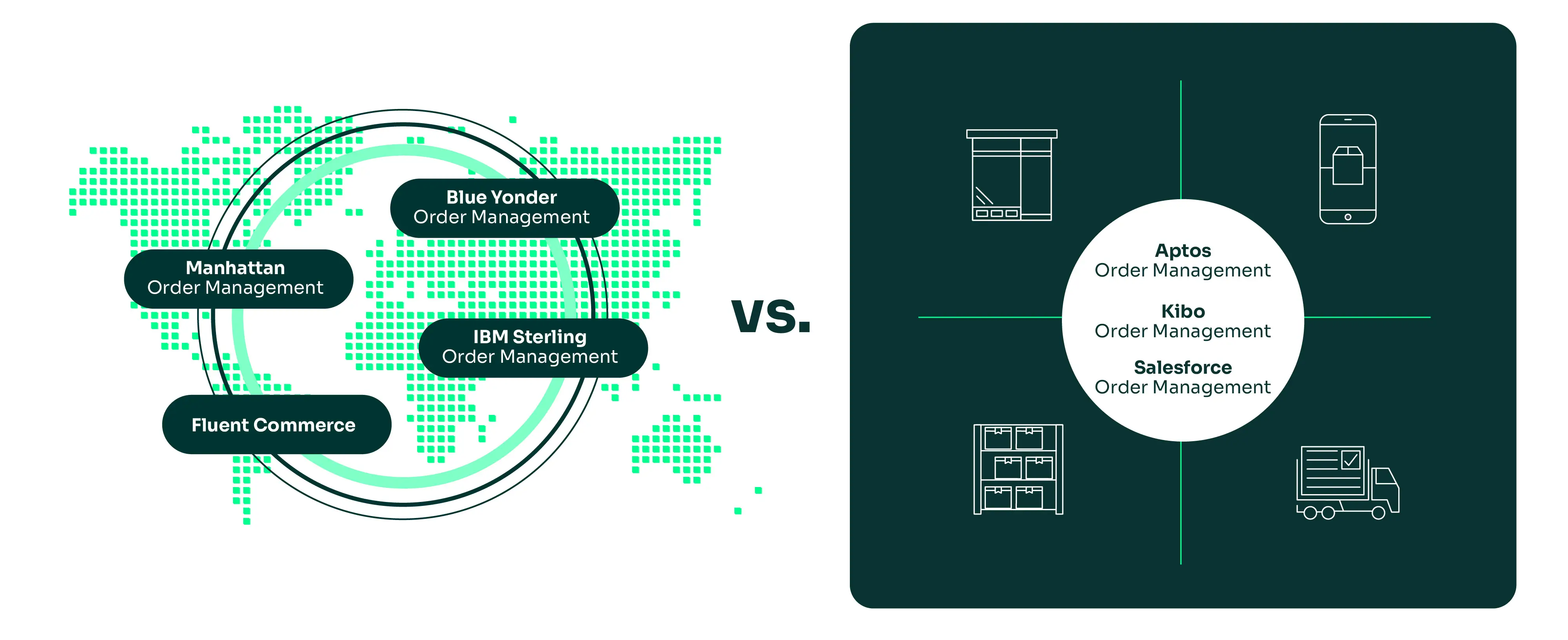
The 7 OMS Platforms: Product Map and Market Fit
Vendor naming creates confusion in this category, so a clear product map helps before any capability comparison begins.
Manhattan delivers order management through the ActiveOrder solution family, which includes Order Management, Enterprise Promise & Fulfill, Customer Service & Engagement, and Digital Self-Service. The platform shares real-time inventory and order data with ActiveStore™ for store operations and with ActiveWarehouse™ for warehouse management. Operations teams and customers get one connected view of inventory, orders, and fulfillment status across every channel simultaneously.
Blue Yonder offers its Order Management & Commerce solution as part of its broader supply chain platform. The platform connects to Blue Yonder's supply chain planning and demand sensing capabilities, giving retailers a broader view from demand through order execution, though that broader platform approach can also introduce greater integration complexity and longer implementation cycles for enterprises focused primarily on OMS-driven unified commerce. IBM delivers IBM Sterling Order Management, a long-tenured enterprise platform with deep B2B and retail roots, now available as a SaaS-delivered product on IBM Cloud. Fluent Commerce offers Fluent Order Management, a cloud-native distributed order management platform built for high-volume omnichannel operations, with particular strength in BOPIS and ship-from-store scenarios.
Aptos delivers Order Management within the Aptos ONE cloud-native platform, pairing it with Aptos POS and merchandising for specialty and apparel retailers. Kibo Commerce offers a modular, API-first order management platform positioned for mid-market B2C and B2B operations that need flexibility without heavy implementation overhead. Salesforce provides Order Management within Commerce Cloud, tightly integrated with Salesforce CRM, marketing automation, and Service Cloud for brands already in the Salesforce ecosystem
Enterprise OMS Comparison: How the 7 Platforms Stack Up
Three capability areas separate the enterprise tier from the rest in 2026: inventory visibility and order promising, fulfillment orchestration across channels and nodes, and post-purchase returns management and customer engagement.
Real-Time Inventory Visibility and Order Promising
Accurate, real-time inventory promising determines whether a shopper completes a purchase or abandons it. Without precise promising, retailers overpromise, underdeliver, and absorb the cost of expedited shipping and service recovery on every failure.
Manhattan's ActiveOrder surfaces network-wide inventory availability across all channels using in-memory caching technology that delivers precise, instantaneous promising at enterprise scale. The Available to Commerce capability governs which inventory exposes to which channel and dynamically selects the best fulfillment source for every order. Machine learning refines those sourcing decisions continuously, so promising accuracy compounds as order volume and fulfillment network complexity grow.
Blue Yonder connects order promising to upstream demand sensing and supply chain planning, giving retailers a predictive view of inbound supply alongside current on-hand inventory. That connection adds forward-looking insight to promising workflows. IBM Sterling Order Management offers real-time inventory visibility across fulfillment nodes through its supply-and-demand engine, with a strong heritage in complex B2B and retail fulfillment scenarios. Some implementations require careful integration design to surface the full depth that large networks need. Fluent Commerce builds visibility on a distributed model, where each fulfillment node publishes its own inventory state and a central engine aggregates availability in real time, minimizing single points of failure.
Aptos ONE connects OMS promising to centralized inventory services shared with the Aptos POS, giving specialty retailers a clean single view within that native ecosystem. Kibo delivers real-time promising with flexible segmentation rules that mid-market operations can configure without developer support. Salesforce Order Management provides inventory availability within Commerce Cloud, with promising accuracy depending on how cleanly external ERP and warehouse management system data syncs into the Salesforce data model. 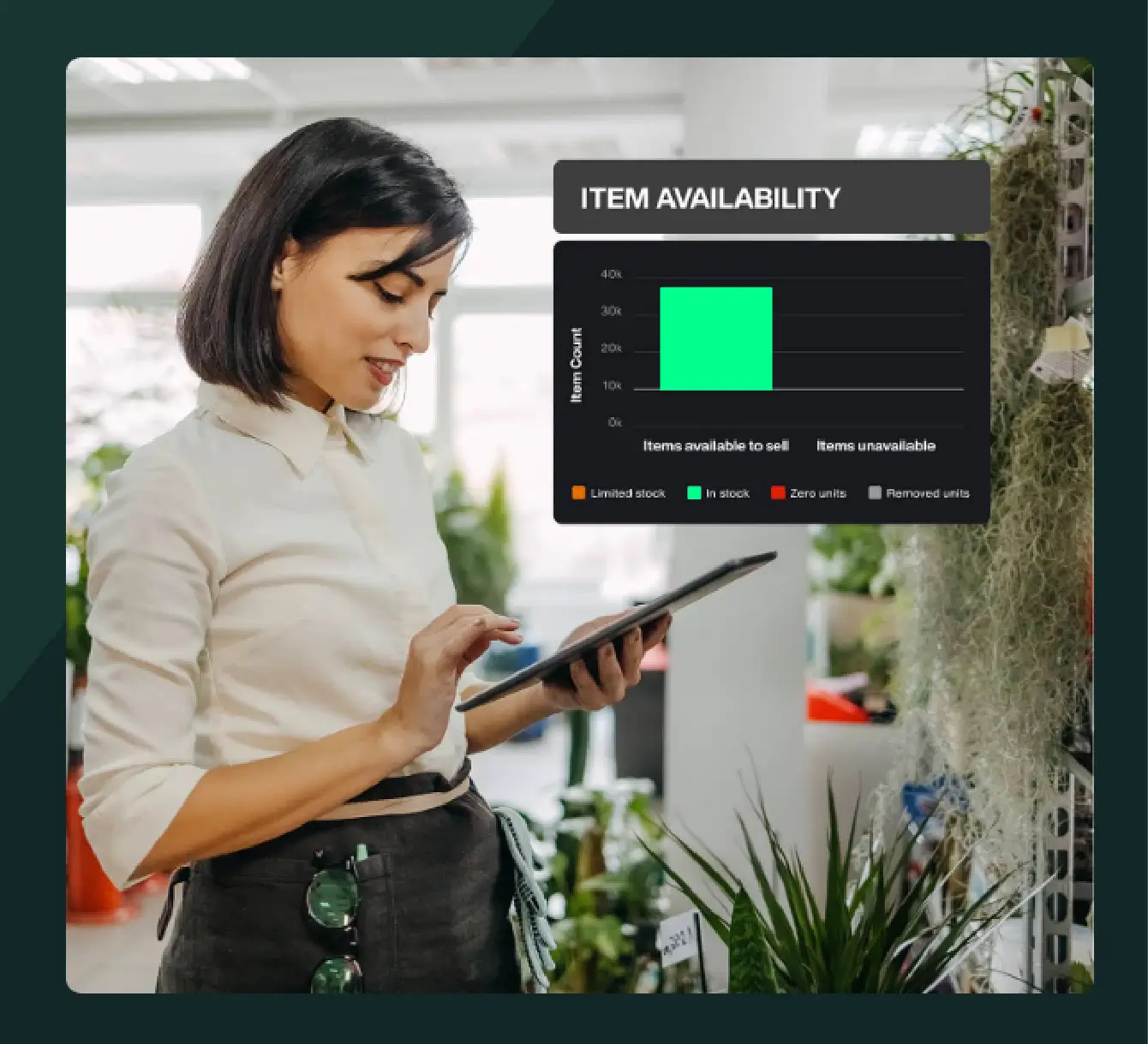
Fulfillment Orchestration: BOPIS, Ship-From-Store, and Multi-Node Routing
Fulfillment orchestration determines whether each order reaches the customer profitably, on time, and from the most cost-efficient node. Modern retailers need routing logic that weighs cost, carrier service levels, node capacity, proximity, and store readiness at the same moment for every order.
Manhattan's ActiveOrder applies intelligent orchestration rules that evaluate every fulfillment option at the moment of routing. Ship-from-store, BOPIS, curbside, drop-ship, and ship-to-store all route through the same orchestration engine. When integrated with ActiveStore, the platform turns every retail location into a reliable fulfillment node with guided associate workflows and real-time task management. Forrester named Manhattan a Leader in The Forrester Wave™: Order Management Systems, Q1 2025, reflecting its strength in fulfillment orchestration, inventory segmentation, and store fulfillment across six consecutive evaluations.
Blue Yonder's orchestration connects order routing to its transportation planning capabilities, helping retailers align fulfillment decisions to carrier availability and freight cost in the same workflow. IBM Sterling Order Management carries decades of enterprise orchestration depth, with extensive rules-based configuration for complex routing scenarios across multi-enterprise supply chain networks and third-party fulfillment partners. Fluent Order Management centers its architecture on distributed fulfillment, treating every store and warehouse as a peer node. That design delivers fast BOPIS and ship-from-store without routing bottlenecks, making it a strong fit for retailers prioritizing fulfillment speed over deep promise precision.
Aptos Order Management orchestrates fulfillment well within the Aptos ONE ecosystem, where shared inventory and POS data reduce integration overhead for specialty retailers operating a single-brand network. Kibo supports multi-node orchestration with configurable routing rules that mid-market retailers can adjust without developer support, keeping operational agility within the business team. Salesforce Order Management handles omnichannel fulfillment for brands already built on Commerce Cloud. Multi-country routing, complex inventory segmentation, and high-volume peak scenarios typically require additional configuration or App Exchange extensions. 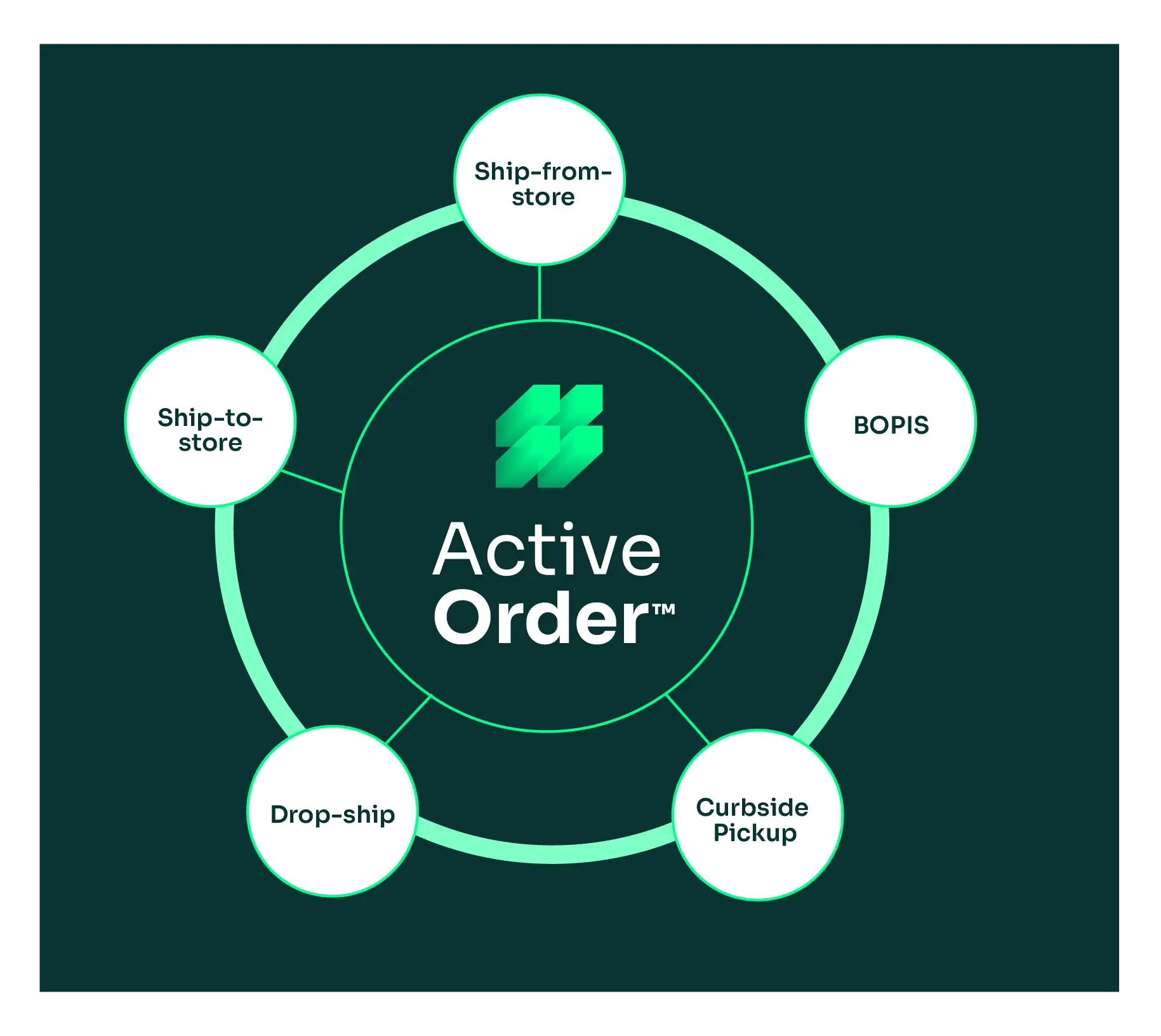
Omnichannel Returns Management and Post-Purchase Customer Engagement
Returns define whether a customer shops a brand again. Post-purchase customer engagement determines whether that single transaction becomes a long-term relationship. Both depend on shared order and customer data flowing across every channel and touchpoint in real time.
Manhattan's ActiveOrder handles unified returns natively, including in-store returns of online orders, cross-channel exchanges, no-receipt processing, and flexible refund routing to original payment or store credit. Manhattan Active Maven, an agentic AI chatbot trained on order management and customer service data, resolves customer inquiries and order modifications without agent involvement. That combination reduces resolution time, lowers service costs, and keeps customers informed through fulfillment and post-purchase stages without adding headcount. ActiveOrder also surfaces self-service order tracking, modification, and cancellation through Manhattan Digital Self-Service, so customers resolve most issues before they ever reach the contact center.
Blue Yonder supports post-purchase customer communication through integrations with its commerce platform partners, with strength in connecting fulfillment events to customer notification workflows. IBM Sterling Order Management provides robust returns rules and cross-channel return processing, including complex B2B return authorization and vendor-return workflows. Fluent Commerce handles returns within its distributed model, with flexibility across return-to-store and return-to-warehouse scenarios that vary by node and region.
Aptos ONE supports omnichannel returns within its ecosystem, with returns data flowing back to centralized customer and inventory records through shared Aptos services. Kibo offers returns management as a configurable workflow within its modular platform, with straightforward handling for mid-market return volumes. Salesforce Order Management integrates returns processing directly with Salesforce Service Cloud, giving brands already on Salesforce CRM a connected path to post-purchase service without a separate integration project.
How to Choose the Right OMS for Your Retail Strategy
Decision criteria fall into four practical buckets when evaluating retail order management software: business size and complexity, omnichannel ambition, existing stack alignment, and vertical needs.
Large, multi-country enterprises and speciality retailers with complex fulfillment networks should focus on solutions from global vendors, such as Manhattan Order Management. Mid-market and e-commerce-first brands will find faster time to value with Aptos ONE Order Management, Kibo, or Salesforce Order Management. Brands already embedded in the Salesforce ecosystem often find Salesforce Order Management the most direct path to connected omnichannel capability without adding a new platform.
Omnichannel ambition matters most. Retailers committed to deep unified commerce, including accurate BOPIS promising, ship-from-store at scale, endless aisle, and unified returns, gain the most from Manhattan's Order Management. Those retailers also gain from the shared data connection between ActiveOrder and ActiveStore, which makes every store a reliable fulfillment node without a separate integration project. Fluent Commerce performs strongly for retailers prioritizing distributed fulfillment speed above all else. IBM Sterling suits complex multi-enterprise networks where third-party supplier coordination defines the challenge.
Existing stack alignment shapes integration cost and timeline more than any other single factor. Manhattan warehouse management and store operations deployments lead to ActiveOrder, since the shared ActivePlatform™ foundation eliminates redundant data pipelines. Blue Yonder supply chain planning investments connect naturally to Blue Yonder Order Management through the Luminate platform. Salesforce Commerce Cloud investments point to Salesforce Order Management. IBM ERP and supply chain environments often pair with IBM Sterling. Each stack match reduces integration overhead and accelerates the path to live operations.
Vertical needs round out the decision. High-velocity specialty retail favors Manhattan's ActiveOrder or Aptos ONE. Grocery and food retail favor Manhattan or IBM Sterling for their depth in perishable inventory and complex fulfillment rules. B2B wholesale and distribution businesses that need to augment existing ERP systems find Manhattan's Enterprise Promise & Fulfill a purpose-built option that adds order management precision without displacing the ERP. Mid-market apparel and footwear brands often find Kibo or Aptos the right balance of capability and deployment speed. 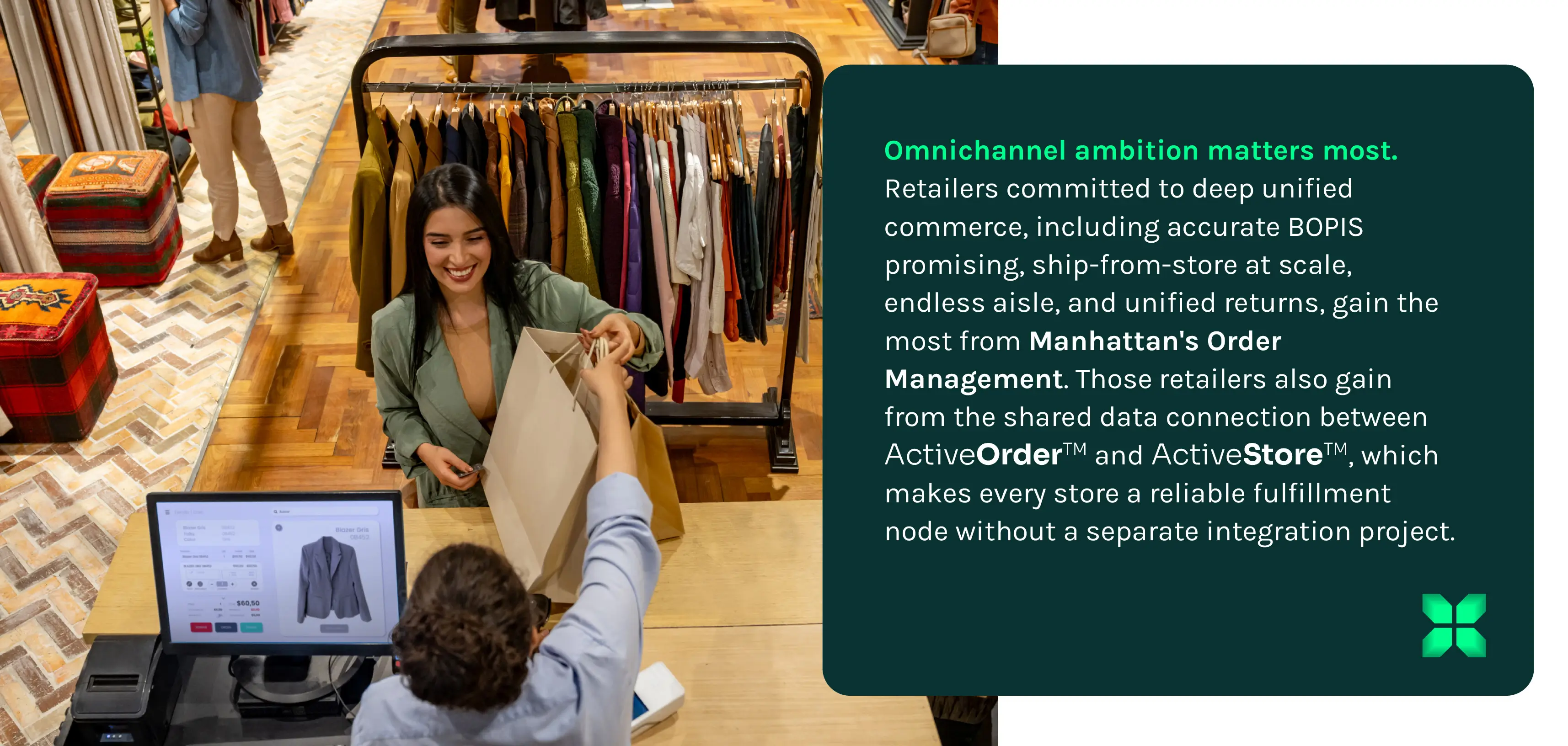
OMS Implementation: What Enterprise Retailers Should Expect
Enterprise order management system software asks more at launch and rewards that investment with longevity. IBM Sterling, Blue Yonder, and Fluent require disciplined integration planning, a clear data strategy, and a strong systems integrator partner. Implementation cycles run longer, but the resulting platform scales across years and absorbs new fulfillment models and new geographies without forcing a re-platform.
Commerce-platform-native and mid-market OMS solutions move faster at lower upfront cost. Salesforce Order Management, Kibo, and Aptos ONE reach first value quickly within their native ecosystems and with smaller implementation teams. Scaling to multi-country operations, complex inventory networks, or high-volume BOPIS programs often exposes gaps in promising depth or fulfillment routing flexibility. Plan for that upgrade path before signing a contract.
Manhattan's ActiveOrder takes a different posture on that trade-off entirely. The solution updates every 90 days with no upgrade project required and no downtime. A cloud-native microservices architecture lets retailers extend the platform, add integrations, and customize workflows without affecting future updates. Mid-market specialty retailers gain enterprise-grade order management without enterprise-grade timelines. Global brands gain a unified commerce foundation that connects stores, warehouses, and customer service in one data environment that evolves continuously alongside the business.
Frequently Asked Questions: Order Management Software for 2026
Order management software coordinates how retailers receive, route, and fulfill customer orders across every channel, from ecommerce and stores to contact centers and third-party marketplaces. Modern OMS solutions connect real-time inventory visibility, intelligent fulfillment orchestration, and post-purchase customer service in a single platform so retailers can promise accurately, fulfill profitably, and resolve issues fast.
Manhattan's ActiveOrder solution family covers Order Management, Enterprise Promise & Fulfill, Customer Service & Engagement, and Digital Self-Service, all built on a cloud-native microservices platform. It fits retailers prioritizing unified commerce, accurate real-time promising, and profitable fulfillment orchestration at enterprise scale.
Manhattan Order Management uses in-memory caching technology to deliver instantaneous promising across all channels at high volume. Machine learning refines sourcing decisions continuously, improving promise accuracy as order volume and fulfillment network complexity increase over time.
Forrester named Manhattan a Leader in The Forrester Wave™: Order Management Systems, Q1 2025. Manhattan has earned Leader recognition across six consecutive Forrester OMS Wave evaluations, reflecting consistent depth in inventory segmentation, fulfillment orchestration, store fulfillment, and unified commerce architecture.
Salesforce Order Management works well for brands already embedded in the Salesforce ecosystem, particularly mid-market retailers with straightforward fulfillment networks. Multi-country operations requiring deep inventory segmentation, complex routing across large node networks, or tight integration with legacy warehouse management system and ERP stacks typically require significant additional configuration or third-party extensions.
Manhattan positions its order management on a unified commerce architecture that shares real-time data across order management, store operations, and warehouse management in a single platform. Blue Yonder connects order management to its broader supply chain planning and demand sensing capabilities, offering a stronger forward-looking planning connection. Retailers prioritizing OMS-driven unified commerce tend toward Manhattan.
Retailers in grocery, electronics, home improvement, and high-SKU specialty typically choose Manhattan's ActiveOrder. The platform's Available to Commerce capability and machine-learning promising engine handle deep inventory segmentation, high-velocity order volumes, and complex fulfillment routing across large store and warehouse networks at the same time.
Fluent Commerce offers a cloud-native distributed order management platform built around treating every store and warehouse as a peer fulfillment node. It suits retailers prioritizing BOPIS speed, ship-from-store scale, and multi-node orchestration agility. Retailers that need deep promise precision, agentic AI customer service, or integrated store associate workflows typically need to pair Fluent with additional solutions.
IBM Sterling Order Management carries deep enterprise pedigree, particularly in complex B2B retail and multi-enterprise fulfillment networks, and the SaaS delivery model modernizes the deployment experience. Retailers evaluating Sterling alongside Manhattan often find that Manhattan's unified commerce architecture, continuous update model, native store integration, and embedded agentic AI offer a stronger long-term foundation for omnichannel retail at scale.