
Global Unified Commerce Benchmark 2026
How Global Retail Leaders Use Unified Commerce to Drive Growth, Efficiency, and Resilience
The 2026 Global Unified Commerce Benchmark analyzes how leading retailers around the world use unified commerce to improve operational efficiency, customer experience, and profitability. Based on industry data and executive insights, the report identifies the cost of inaction and the strategies top performers use to stay competitive.
Why Unified Commerce Matters for Retail Leaders
Retailers worldwide face mounting pressure to deliver seamless customer experiences across every channel. The 2026 Global Unified Commerce Benchmark reveals how leading brands succeed across Shopping, Checkout, Fulfillment, and Service. Retail leaders gain actionable insights into industry best practices, competitive positioning, and strategic opportunities to elevate their customer experience strategy.
Where Do You Rank in Unified Commerce Maturity?
Discover exactly where you stand against direct competitors and identify the specific capability gaps holding you back from customer experience leadership.
4 Maturity Levels That Map Your Path to Leadership
Get a proven maturity framework and actionable recommendations that prioritize investments based on customer impact and competitive advantage potential.
Lead the Market Instead of Following Your Competitors
Understand emerging trends and leading practices before they become industry standard, positioning your brand ahead of market evolution.
What Is the Unified Commerce Benchmark?
The Unified Commerce Benchmark is an annual report showing how leading retailers transform strategies across digital channels, stores, and fulfillment. It reveals how technology, processes, and organizational efforts improve customer experiences, efficiency, and performance. Comparing retailers at different maturity levels, the benchmark highlights top performers, common challenges, best practices, and results like cost savings, agility, and revenue growth. By analyzing operations and data, it helps executives understand the cost of inaction and strategic steps to succeed in today’s evolving retail environment.
Key Findings From the 2026 Benchmark
The Path to Leadership
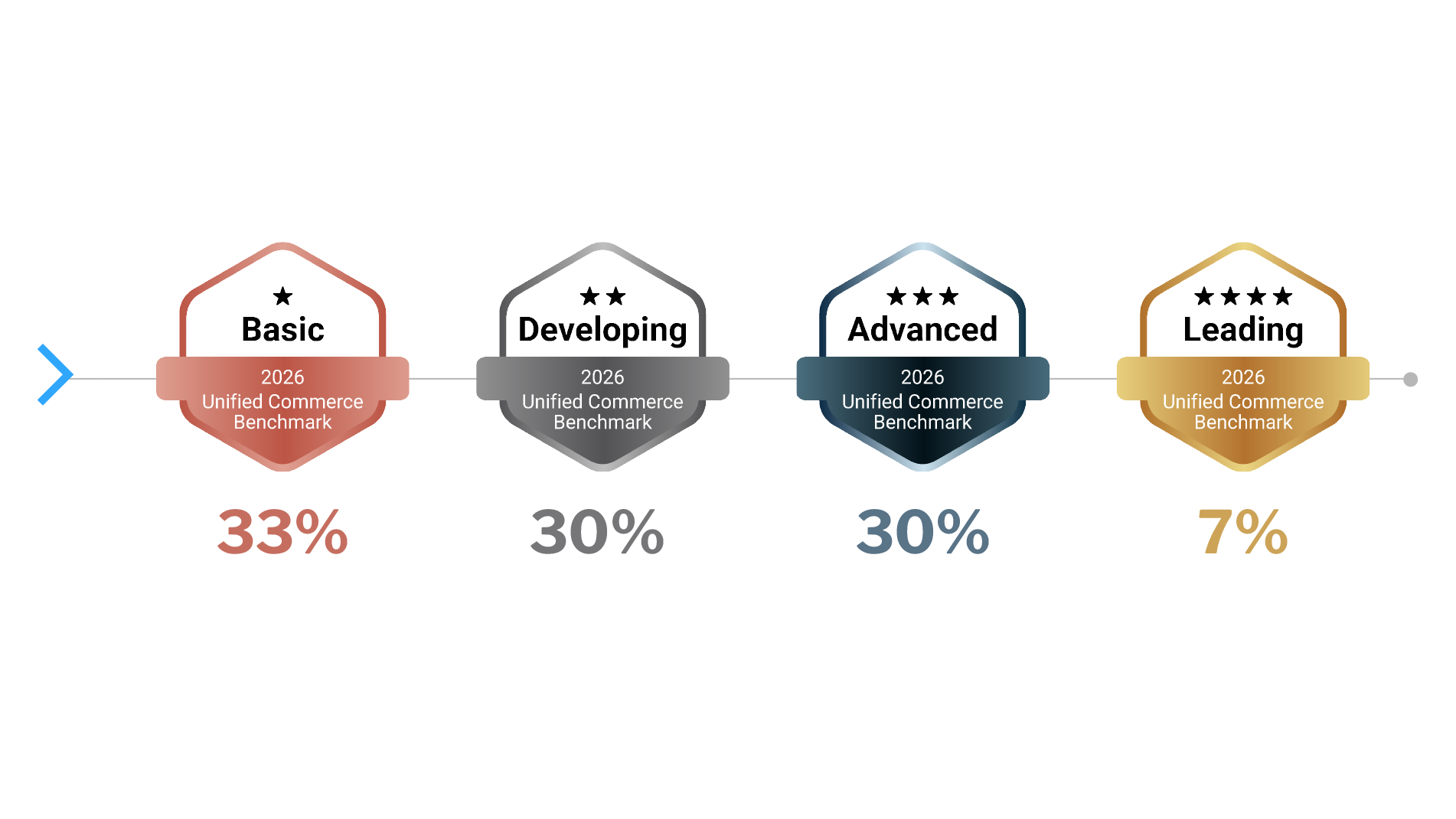
What sets the best apart in unified commerce? Pioneering retailers go beyond merely connecting channels, they craft seamless, adaptive experiences that respond in real-time to how customers shop. This marks a profound shift from simple channel links to achieving operational excellence and orchestrating compelling experiences on a large scale. Yet only 7% of retailers reach this leadership level.
The distribution of maturity levels highlights the challenge: 33% operate at the Basic stage, with 30% each at Developing and Advanced tiers. Just 7% have attained Leading status. This gap creates a significant competitive advantage for those who master unified commerce; transforming strategy and experience into ongoing growth, resilience, and financial success.
Unified Commerce Leaders Grow 2X Faster
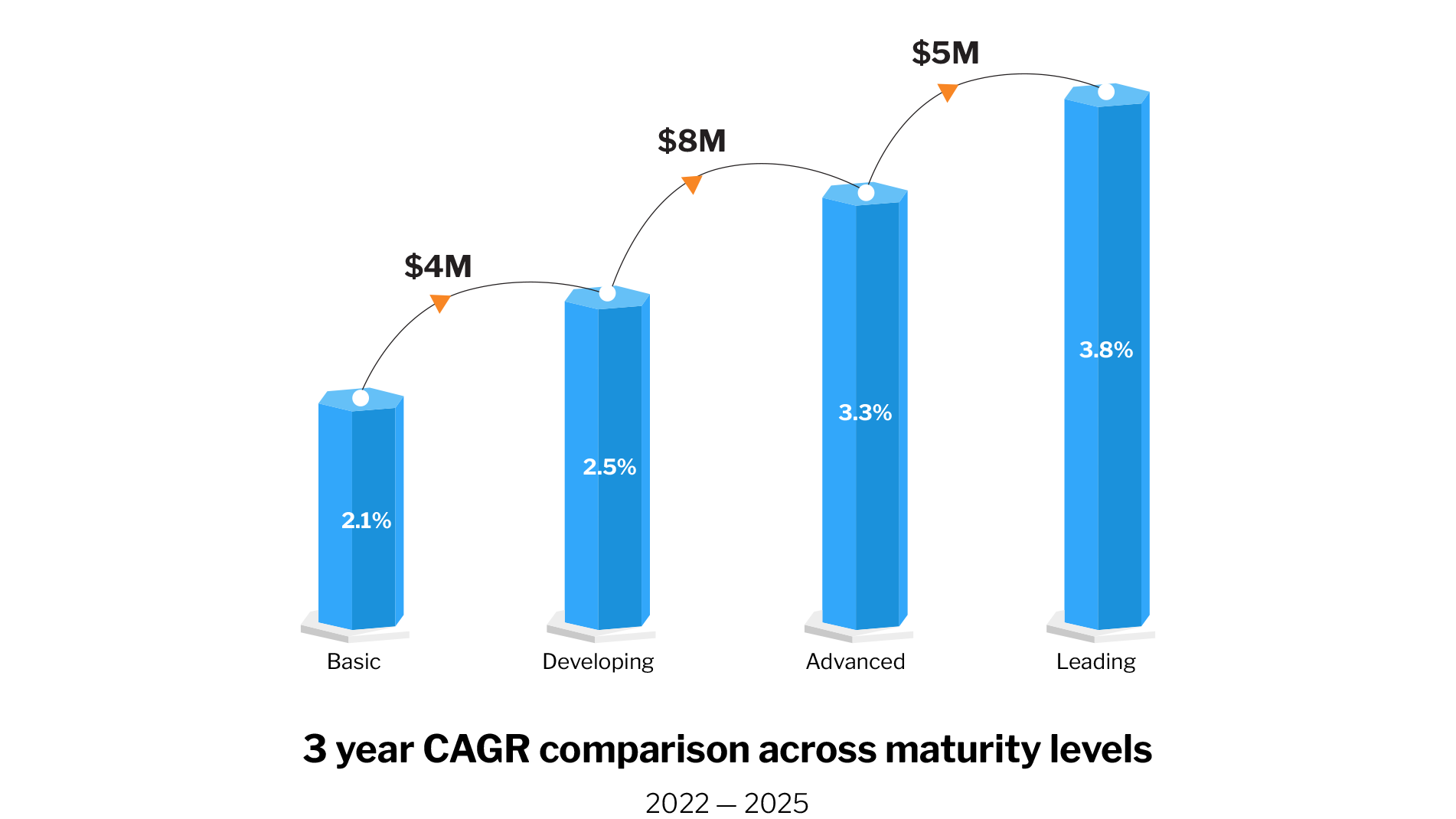
Every step up in maturity drives measurable growth impact. Retailers at higher unified commerce maturity levels demonstrate 2× higher growth rates than those at the Basic maturity level. While Basic-tier retailers struggle to consistently convert macro tailwinds into sustained performance, those who progress through Developing and Advanced maturity levels see structurally higher growth. The numbers prove it.
Retailers at the Basic level see a growth rate of 2.1% CAGR, adding $4 million in incremental revenue for every billion dollars. Pacesetters at the Leading maturity level outperform with a 3.8% CAGR and $17 million in additional revenue, highlighting the immense growth potential from Basic to Leading. Transitioning from Developing to Advanced maturity levels delivers the most significant near-term revenue boost, underscoring the importance of investing in operational excellence and customer experience. As these growth benefits accumulate over time, the opportunities for expansion become even more promising.
Yesterday's Differentiators Changed to Table Stakes
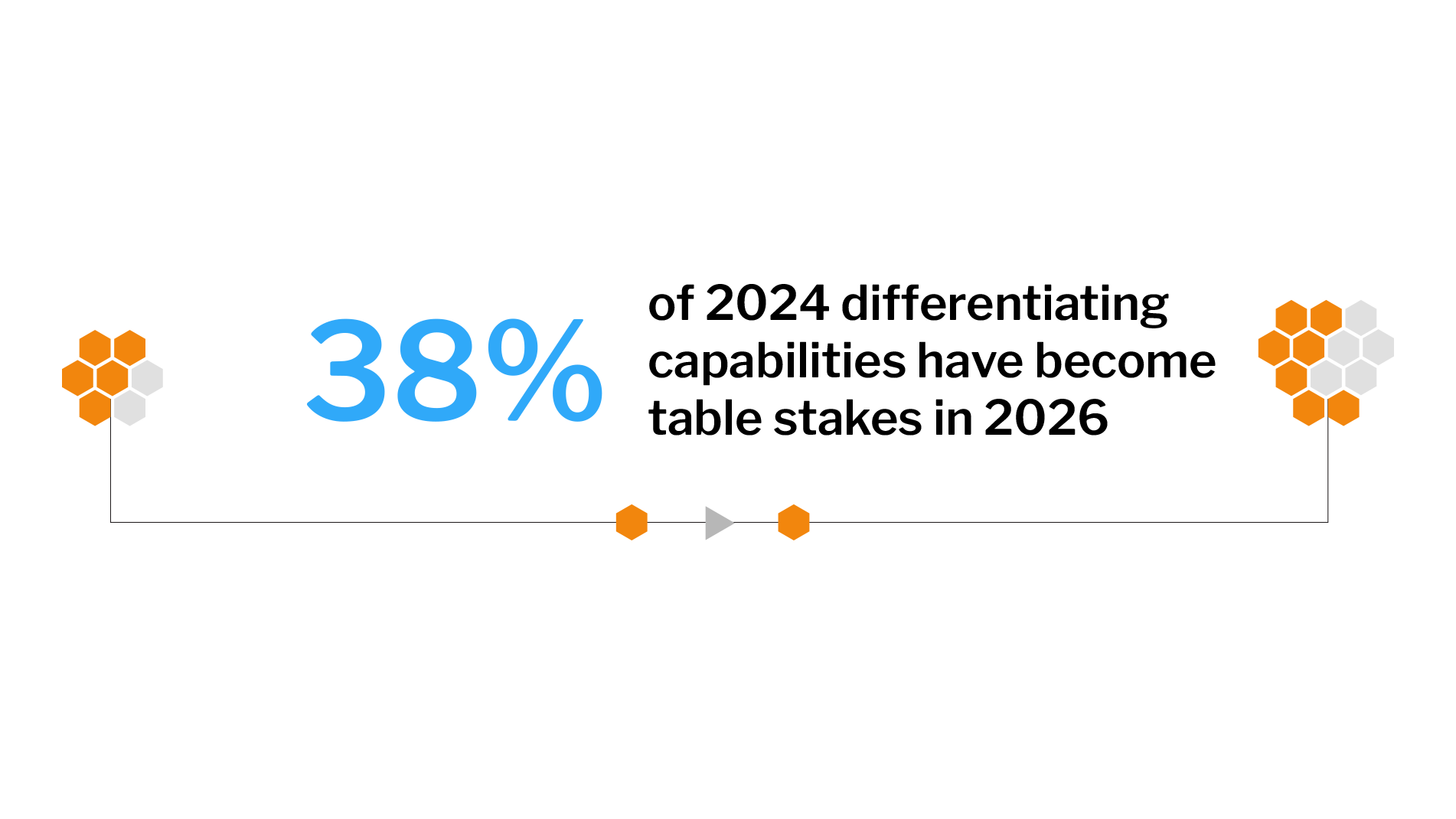
The bar for unified commerce leadership rose dramatically. What defined pacesetters in 2024 became baseline expectations by 2026. Nearly two in five differentiating capabilities, 38% of them, shifted from competitive advantages to table stakes in two years. The innovation cycle compresses faster than ever.
Digital integration, inventory visibility, and flexible returns all shifted from advanced capabilities to standard offerings. The new frontier: AI-driven personalization, conversational commerce, flexible fulfillment, and cross-channel support. Capabilities commoditize rapidly. Retailers that delay adoption fall behind, competing on yesterday's capabilities while pacesetters define tomorrow's standards.
Get the Competitive Intelligence You Need to Lead
Retailers worldwide face mounting pressure to deliver seamless experiences. Gain the competitive intelligence, strategic roadmap, and future-ready insights you need to lead your market. Access the data that drives transformation.
Want to see how your brand compares?
Find Out Where You're Losing Ground to Competitors
Leaders grow 2X faster than basic retailers, and the gap widens every quarter. Get a detailed analysis of your Shopping, Checkout, Fulfillment, and Service experiences to identify quick wins and strategic priorities.