Hot Takes from a Chilly New York: NRF 2026
- January 20, 2026
- Manhattan Associates
- Read time: 3 minutes
Key Takeaways
-
Retailers and consumers in 2026 are demanding faster, smarter, and more personalised experiences.
- Authenticity and empowerment are key for brands seeking to connect with younger generations.
- The evolution of retail leadership is increasingly influenced by agentic AI.
‘Demand Better’ was the central message from Manhattan Associates at NRF this year, and it was certainly in step with the broader narrative of the 2026 edit.
Whether the topic was AI agents or AI in retail, immersive and interactive shopping, the search for authentic connections with consumers, or finding the hidden revenue in reverse logistics and recommerce, the message was consistent - retailers and consumers continue to demand faster, smarter, better experiences in 2026.
If you couldn’t make it to New York for NRF this year, below are our three hot takes from the largest gathering of retail, consumer and technology experts in the world.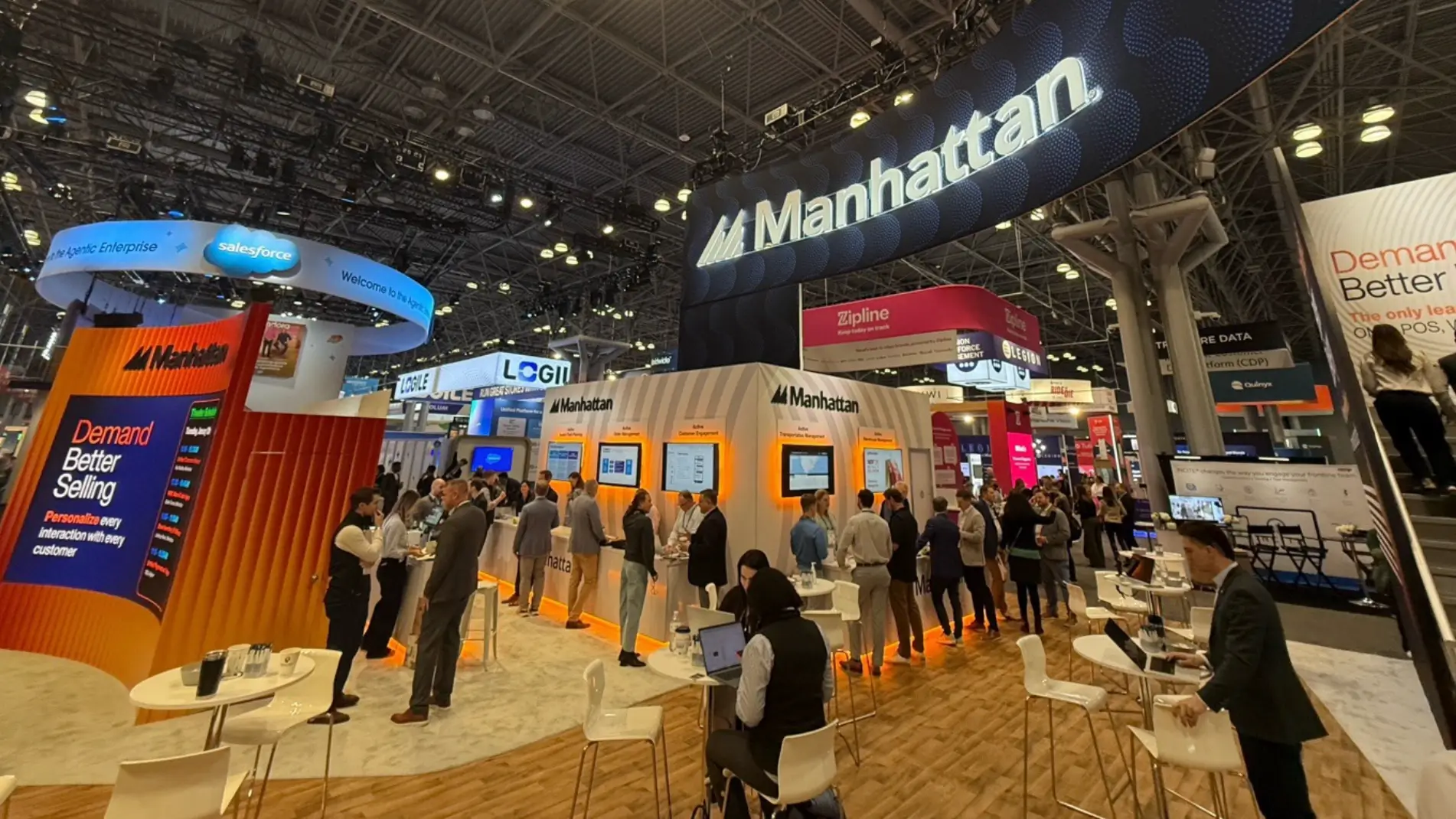
Community, Authenticity and Empowerment
Ask any brand about connecting authentically with younger consumers and they'll tell you that it isn’t easy.
However, Pacsun may have cracked it. Known for its exclusive collection of brand partnerships, Los Angeles-influenced styles and strong digital presence, CEO Brieane Olson reiterated the need for brands to provide Gen Z customers (and soon Gen Alpha) with authenticity and empowerment.
Whether it's mental health or climate change, young consumers are passionate about the issues that not only impact them directly, but also wider communities and society. With that in mind, Olson provided clear advice for brands wanting to create connection: “Give them a seat at the table. Actually, hear out why they’re different and try to adapt yourself to be a part of their future.”
Naturally this approach to brand authenticity raises questions. Can retail move at the speed of culture? Can brands move as fast as the consumer? The good news is that the retail and supply chain technology underpinning brand experience and customer promise is only getting smarter, faster and more intuitive (as evidenced by Pacsun recently).
Why Guardrails and Strategic Partnerships Are Essential for Agentic AI Success
During the Big Ideas session titled “Is Agentic AI Already Rewriting the Rules of Retail Leadership?”, Manhattan, Groupe Dynamite, Bealls, and Shopify discussed the significant gains and challenges confronting retailers looking to deploy agentic AI.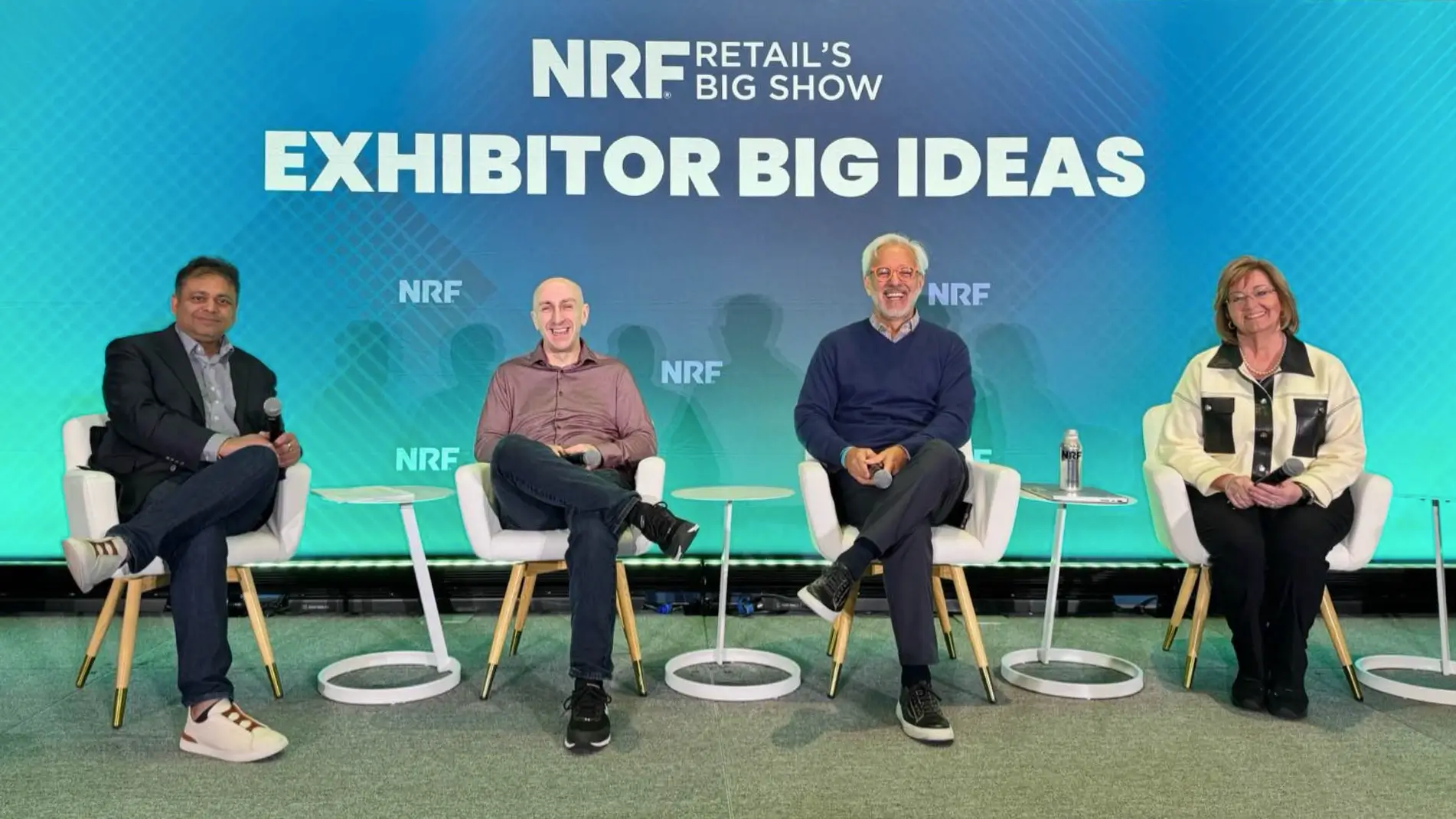
Manhattan CTO, Sanjeev Siotia emphasized the importance of maintaining, “governance in your policies,” and “keeping the human in the loop in the right place where it doesn’t slow you down.” Groupe Dynamite CTO, Dave Stevens highlighted the importance of good quality data. “If it’s garbage in, you get garbage out, no matter how good your AI is,” he said.
For most retailers, the immediate goal is clear: reduce operational lag and increase employee productivity. Karen Beebe, CTO, Bealls Inc. commented on prioritizing value. In her words, “we’re focusing on using AI for the most impactful things. We want to use it to help us make decisions quickly so we can move fast.”
The potential uses of agentic AI are practically infinite, representing a challenge in itself – decision paralysis. The broad consensus is to begin small, test enough to proceed with confidence, and scale. Eduardo Frias, Field CTO for Lifestyle, Shopify highlighted the need to get moving. “Pick a use case that works for your business and get going.”
Google’s and Walmart’s leaders are betting on AI too, as they announced they would be joining forces to shape the future of retail. Google’s CEO Sundar Pichai and Walmart’s incoming CEO John Furner announced that the two industry titans will partner closely, revealing that shoppers will be able to purchase Walmart and Sam’s Club products through Google’s AI chatbot Gemini.
In addition to the Walmart relationship, Google also announced Universal Commerce Protocol (UCP), aimed at becoming the industry standard for retailers’ AI agents and systems. Developed in collaboration with Walmart, Shopify, Etsy, Wayfair, and Target, Pichai explained that “UCP is meant to be a global protocol that can also work with existing agent protocols, meaning the retailer is able to shape the relationship at every step as the merchant of record.”
The takeaway here is that while Large Language Models (LLMs) continue to transform business models - and AI agents are becoming more sophisticated and ubiquitous (see our recent AI Agent Workforce announcement) - companies cannot tackle this new horizon unilaterally.
In summary, agentic AI may well hold the key to future business success, but it is critical to collaborate and work together to find the right balance. While the Big Ideas session reminded us of the importance of actually getting the ball rolling on AI projects, recent industry announcements serve as a timely reminder of the enduring importance of ecosystems and partnerships.
Unlocking Hidden Revenue Opportunities in Reverse Logistics
Reverse logistics has become an increasingly hot topic for retailers over the last few years. In the UK alone, according to our latest holiday research, consumers returned over 52 million items, representing £1bn+ of unwanted Christmas gifts. The sheer scale presents a significant financial challenge for already-strapped retailers.
More than simply returns, however, a discussion between eBay, Abercrombie & Fitch Co., ThredUp and UNIQLO looked at the opportunities emerging from more sophisticated reverse logistics and the growing demand for circular retail models.
Retailers and manufacturers are increasingly looking at resale, refurbishment, recycling and material recovery to extract incremental margin while meeting rising expectations for environmental responsibility – a great example of this is Arc’teryx’s ReBIRD scheme.
When retailers align data, technology and cross-functional teams around the customer experience, these initiatives can evolve into profitable, trusted value streams. Alex Goldelman, CFO of UNIQLO North America, summed it up for the audience at the event, saying “There’s money there [in returns]. Don’t overlook it.”
Reverse logistics can be a strategic lever for not only revenue growth, but also customer loyalty and sustainability when it is underpinned by the right technology foundations.
Want to find out more about Manhattan’s AI Agent Workforce or its latest enhancements for retailers? Drop us a line.
Everything Works Better With Manhattan Solutions
Manhattan offers a complete breadth of solutions that when unified, provides total coverage for your supply chain commerce needs.

Order Management
Order Management provides stores with visibility into available inventory held anywhere, supporting endless aisle selling.

Store Inventory & Fulfillment
Store Inventory & Fulfillment optimizes stores for omnichannel retail with improved store inventory accuracy and more efficient store fulfillment processes.

Point of Sale
Modernize the store with Point of Sale—a cloud-native retail POS application enabling store associates and managers to delight shoppers and improve store performance.